The War Game: A Shocking Exposé on Nuclear Warfare and Its Consequences
110 likes | 236 Vues
"The War Game," a 1965 documentary directed by Peter Watkins, innovatively blends fact and fiction to reveal the devastating effects of nuclear warfare. Based on events like Hiroshima and Dresden, it exposes the inadequacies of British civil defense. Initially banned in the UK for contradicting government views, it evokes strong emotional responses against nuclear weapons while showcasing the social chaos, health effects, and possible outcomes of an attack. Awarded Best Documentary at the 1967 Academy Awards, it remains a crucial commentary on nuclear safety and public awareness.


The War Game: A Shocking Exposé on Nuclear Warfare and Its Consequences
E N D
Presentation Transcript
The War Game BBC 1965 Stephanie Potter and Andrew Wood
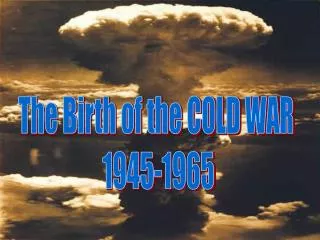
Background • Watkins a controversial filmmaker using innovative techniques • Based on events at Hiroshima, Nagasaki, Hamburg, Dresden, and, Darmstadt • Watkins based initial feelings on photographs
Background (Cont.) • Prepared through interviews (scientists, civil service, etc.) and scientific fact • Combined fact and fiction • British government refused to provide help, only help was through Kent fire services for firestorm scenes
Background (Cont.) • Completed in 1965 • Meant to be aired on television during anniversary week of Hiroshima bombings • Banned from British television—contradicted official British position on nuclear survivability • Aired on TV for first time in 1985 • Shown in cinemas from 1966 onward through ban loophole • Awarded “Best Documentary Feature” at 1967 Academy Awards
Watkins’ Goals • Expose inadequacy of Civil Defense program • Lack of education for general British population (Effects of bomb; handing out safety pamphlets at the last minute) • Portrayal of effects of nuclear attack • Evoke pathos and sentiment against nuclear weapons • Set in an idyllic part of Britain
Purported Attack Chronology • Less than three minutes warning time • Problems with evacuation to countryside • Inability of population to afford and adequately build bomb shelters • Immediate intense heat (“melt the upturned eyeball”) • Firestorms • Mass chaos
Effects • Massive casualties • Destroyed economy • Simple threat: Four years to fully recover • Actual attack: All of attack area/20% of “safe” areas rendered uninhabitable
Social Effects • General apathy toward life • Disregard for law • Hunger riots • Killing of security forces • Anarchy • Euthanasia • So traumatic no amount of therapy would help • Health effects • Radiation poisoning • Leukemia • Scurvy from lack of nutrition • Children • Extreme apathy
End • Discusses problems of using nuclear weapons • Threat of growing stockpiles and proliferation
Questions • Which parts do you think were real statistics and accurate interpretation vs. exaggeration meant to evoke strong emotions? • If an attack did occur, there would be a strong public outcry for retaliation: how would the government respond? Would they be locked into a series of mutual retaliations? • Watkins used both statistics, civilian interviews and potentially “real life” footage to make his points. Which depictions were the most effective and why?
Sources • The War Game • “The War Game Revisited” http://picpal.com/peterwatkins.html • IMDB Information on The War Game—http://www.imdb.com/title/tt0059894/ • Others