Understanding Liberal Democracies, Semi-Democracies, and Authoritarian Regimes
This overview explores the characteristics and expectations of liberal democracies, semi-democracies, and authoritarian systems. It emphasizes key elements such as inclusiveness, voting rights for the adult population, and the implementation of free and fair elections. The evolution of Mexico's political landscape before 2000, the collapse of the Soviet Union, and the transition of China post-Mao are analyzed. Additionally, the challenges faced by Nigeria during its transitions between military and democratic governance are highlighted to illustrate varied democratic experiences.

Understanding Liberal Democracies, Semi-Democracies, and Authoritarian Regimes
E N D
Presentation Transcript
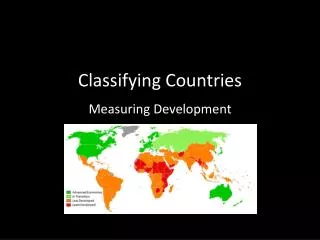
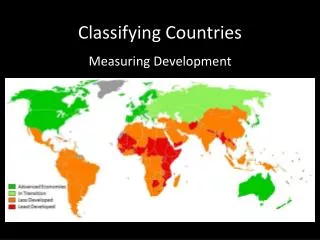
Classifying Countries: Liberal Democracies, Semi-Democracies, and Authoritarian Systems
What do we expect to find in a democracy? • Inclusiveness • all or almost all of the adult population entitled to vote • Elections • free and fair elections -- elections with choice • competition
Mexico before 2000: • constitution • some restrictions on political rights • some competition • elections, but not entirely free and fair elections • dominance of the PRI (Party of Institutional Revolution)
Two transitions and their outcomes: • The (former) Soviet Union • The People’s Republic of China
Soviet Union: • Gorbachev’ s attempt to reform the system in the 1980s • Glasnost • Perestroika • Increasing divisions • Collapse and break-up • Democratization of former Soviet republics?
The People’s Republic of China • Deng Xiao Ping and China after Mao • Tiananmen Square – 1989 • The PRC since 1989 • Shift toward capitalism • End of state controls, iron rice bowl • Retention of party and state controls
First Republic: parliamentary system, 1961-1966 civil war blocking Biafran secession, 1966-1969 military rule: General Gowan, 1969-1975General Obasanjo, 1975/6-1979 Second Republic: presidential system from 1979-1983 Military governments from 1983-1993 General Babangida General Abacha Redemocratization in 1993 under Obasanjo Nigeria: