Xenon: The Versatile Noble Gas for Advanced Technologies
40 likes | 171 Vues
Xenon (Xe), atomic number 54, is a noble gas with a brilliant blue glow, primarily used in fast rockets and other advanced technologies. Discovered by Sir William Ramsay on July 12, 1898, it finds applications in power lamps, bubble chambers, nuclear medicine, and ion propulsion systems. Present in Jupiter's atmosphere and obtained through the liquefaction of air, xenon has unique properties that make it ideal for space technology. However, caution is necessary as inhalation can cause dizziness and liquid exposure can lead to skin frostbite.


Xenon: The Versatile Noble Gas for Advanced Technologies
E N D
Presentation Transcript
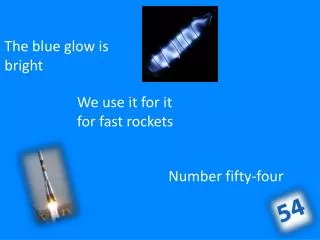
The blue glow is bright We use it for it for fast rockets Number fifty-four
Name: Xenon • Symbol: Xe • Atomic Number: 54 • Atomic : Mass • Density: 5.9g • History • Discovered by Sir William Ramsay • July 12, 1898 • Found after Krypton and Neon
Uses • Power Lamps • Bubble Chambers • Some Nuclear Medicine • Ion Propulsion • Electron Tubes • Probes • Oxidizing Agents • Where Element can be Found • Jupiter’s Atmosphere • Extracted from liquefied Air • Decay from Iodine, Uranium, and Plutonium
How Element Affects Human Body • When inhaled, it can cause dizziness and, in liquid form, it will cause frostbite and impacts on skin • Other facts • Preferred space propulsion because of it’s low ionization potential per atomic weight