Earth's Biomes: Exploring Diverse Ecosystems
Dive into Earth's biomes and learn about the unique ecology of each, from tropical rainforests to Arctic tundras. Explore the abiotic and biotic factors shaping these environments.

Earth's Biomes: Exploring Diverse Ecosystems
E N D
Presentation Transcript
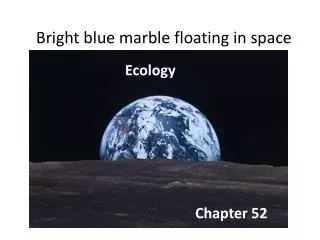
Bright blue marble floating in space Ecology Chapter 52
Environmental factors • Abiotic factors • non-living chemical & physical factors • temperature • light • water • nutrients • Biotic factors • living components • animals • plants
Marine coral reef benthos intertidal
Tropical rainforest distribution: equatorial precipitation: very wet temperature: always warm characteristics: many plants & animals, thin soil
Savanna distribution: equatorial precipitation: seasonal, dry season/wet season temperature: always warm characteristics: fire-adapted, drought tolerant plants; herbivores; fertile soil
Desert distribution: 30°N & S latitude band precipitation: almost temperature: variable daily & seasonally, hot & cold characteristics: sparse vegetation & animals, cacti, succulents, drought tolerant, reptiles, insects, rodents, birds
Temperate Grassland distribution: mid-latitudes, mid-continents precipitation: seasonal, dry season/wet season temperature: cold winters/hot summers characteristics: prairie grasses, fire-adapted, drought tolerant plants; many herbivores; deep, fertile soil
Temperate Deciduous Forest distribution: mid-latitude, northern hemisphere precipitation: adequate, summer rains, winter snow temperature: moderate warm summer/cool winter characteristics: many mammals, insects, birds, etc.; deciduous trees; fertile soils
Coniferous Forest (Taiga) distribution: high-latitude, northern hemisphere precipitation: adequate to dry (temperate rain forest on coast) temperature: cool year round characteristics: conifers; diverse mammals, birds, insects, etc.
Arctic Tundra distribution: arctic, high-latitude, northern hemisphere precipitation: dry temperature: cold year round characteristics: permafrost, lichens & mosses, migrating animals & resident herbivores
Alpine Tundra distribution: high elevation at all latitudes precipitation: dry temperature: cold year round characteristics: permafrost, lichens, mosses, grasses; migrating animals & resident herbivores