World War I
World War I was driven by complex factors such as nationalism, militarism, and imperialism. Nationalism fostered devotion to one’s nation, while militarism led to the escalation of armed forces as tools of diplomacy. The assassination of Archduke Franz Ferdinand in 1914 sparked a series of events, drawing in powers like Germany, Austria-Hungary, and Russia into conflict. Despite initial American neutrality, economic interests and provocations pushed the U.S. to join the Allies, culminating in a global war that reshaped the political landscape of Europe and beyond.

World War I
E N D
Presentation Transcript
Causes of World War I • Nationalism • A devotion to the interests and culture one’s nation. • Imperialism • Strong countries extending economic and political control over smaller countries • Militarism • Development of armed forces and their use as a tool of diplomacy. • You-tube Clips: Imperialism and Nationalism
The Collapse • The Triple Entente • Great Britain, France, and Russia • The Triple Alliance • Germany, Austro-Hungarian Empire, and Italy. • Rivalry: • Between Germany and Great Britain. • Germany striving to become world power. • Britain- already was one. • Not the immediate cause of war. • Conflict involving nationalists movements within the Austro-Hungarian Empire.
June 28, 1914 • Archduke Franz Ferdinand • Assassinated while visiting Bosnia • Bosnia was a province of Slavic Nationalists • They wished to annex to neighboring Serbia. • The assassin of Archduke was a Serbian Nationalists. • Germany, Austria-Hungary launched an assault on Serbia. • Serbia calls Russia to help. • August 3- Germany declared war on both Russia and France. • Did invade Belgium • August 4- Great Britain declared war on Germany. • SHOW YOU-TUBE CLIP OF ASSASSINATION
Italy • They remain neutral • Later will emerge on the side of British and French. • Ottoman Empire • Other smaller nations all joined the fighting later in 1914 or1915 • Virtually every European continent and part of Asia were embroiled in a major war.
Wilson’s Neutrality • Called on his citizens to remain impartial. • Many Americans wanted to side with Great Britain. • Economic Realities • U.S to deal with others on equal terms. • Britain imposed naval blockade on Germany. • To prevent munitions and supplies from reaching the enemy.
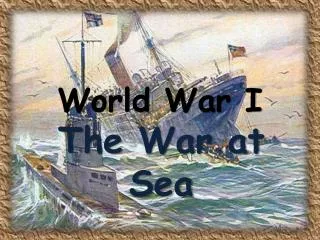
Wilson’s Neutrality • U.S • Received huge war orders • One from Britain and France to produce economic boom. • 1915 • Went from neutral power into the arsenal of the Allies. • Early 1915 • Germany used submarine to disrupt flow of supplies to England. • May 7, 1915 • Lusitania- British submarine. • Germany sunk it without warning. • Killed 1,198- 128 American • Ship was carrying passengers and munitions. • An act of piracy against Americans • Told Germany to stop sinking nonmilitary ships. • 1916- U.S began arming merchant ships. • Germany vowed to sink them.
Moving Towards War • Wilson • Wanting to remain Neutral! • Tensions with U.S and Germany rose • Wilson began to change his mind. • 1915 • Wilson approved a proposal by military leaders. • Rapidly increase the nations armed forces. • Got the President gig for his slogan: • “He kept us out of war” • Hughes would lead them to war. • Wilson won the election by only 23 electoral votes.
U.S Enters the War • Being Re-elected Wilson gave a speech. • Congress • Outline a plan for constructing a new world order after the war in which the U.S would help maintain peace throughout a permanent league of nations. • Feb 25, 1917 • Britain gave Wilson a telegram • Intercepted from the German foreign minister • Arthur Zimmerman • To the government of Mexico
Proposed Event • With a war between U.S and Germany • Mexico would join with Germany against Americans. • Return: • Mexico would regain their lost provinces
American Goes to War!!! • Shortly after this: • Zimmerman notes flamed public opinion. • Brought popular sentiment for war. • Germany sank three ships: • Wilson asked congress to declare war • April 2, 1917 • War was declared on April 6, 1917.
Bolshevik Revolution • Britain and France had a few remaining reserves. • By 1918 • Russia had withdrawn from the war altogether • Bolshevik Revolution • Watch YOU-TUBE CLIPS of the murder of the Romanov Family. • After the Bolshevik Revolution • New Government led by Vladimir Lenin. • He led a hasty and costly peace with the Central Powers. • This freed German Troops to fight only on the Western Front.
The American Expeditionary Force • 1917 • There were only about 12,000 soldiers in the army • 80,000 in the National Guard. • Neither had combat experience • Few Commanders had small experience as well. • Selective Service Act • Brought 3 million men into the army. • Another 2 million joined various branches of the armed services. • Together they formed the American expeditionary force.
The Military Struggle • 1918 • Troops were under the command of John J. Pershing. • Joined the forces of the Allies • Began turning back a series of new German assaults. • July 18 • Allies halted German advance. • German military leaders began to seek an armistice. • Pershing • Wanted to drive on into Germany. • Allied leaders accepted the German proposal • November 11, 1918 • THE WAR WAS OVER!!!
Wilson’s 14 Points • Early 1918 • Wilson developed a plan to help to govern international conduct in the future. • 14 Points to outline his plan: • 1. Freedom on the seas • 2. Open covenants instead of secret treaties. • 3. Reductions in armaments • 4. Free Trade • 5. Impartial mediation of colonial claims • 6. League of Nations • Wilson hoped Europe would adopt this plan. • Wilson’s tone: Superiority • Resented him
Wilson’s 14 Points • They were also offended by his insistence on keeping American military forces separate from the Allied armies they were joining. • Biggest Reason: • France and Britain did not want to be generous to Germany. • They wanted them to be punished and for their countries to receive compensation for their losses.
The Paris Peace Conference • Principal figures in the negotiations were the Allied nations: • Great Britain: Lloyd George • France: Clemenceau • Italy: Orlando • U.S.A: Wilson • These were known as the BIG FOUR! • Wilson unable to win approval of many of the 14 points. • BRITAIN, FRANCE, AND ITALY • All demanded reparations from Germany • Sum of 56 Billion • Far more than what they could afford. • Wilson- One important victory • Jan 25, 1919- allies voted to accept the League of Nations.
The Ratification Battle • American’s • Used to the nation’s isolationism from Europe. • Questioned new commitment to internationalism.
Treaty of Versailles • Wilson presented this plan to the Senate • July 10, 1919 • Wilson insisted that Congress accept the treaty without making changes to it. • Senate raised objections • One slowly read the 300 page document. • Held six weeks of public hearings to hear complaints. • Congress would not budge • Wilson went to the public • Embarked on the Cross-Country Speaking tour. • 3 weeks- he traveled 8,000 miles by train. • Spoke 4 times a day. • September 25- Pueblo, Colorado • Collapsed • Rushed back to D.C. • Suffered a major stroke
Wilson Recovery • Wife of President Wilson • Doctor and Wife formed a barrier around him • Shielded him from any official pressures. • Prevented the public from receiving any information of his condition. • Wilson recovered enough to resume a limited schedule. • He was invalid for the remaining months of his presidency.