3D Solids Vocabulary
This informative guide explores essential vocabulary related to 3D solids, including vertices, edges, and faces. Key shapes such as cubes, prisms, cylinders, and pyramids are defined along with their properties. Learn the differences between polyhedra, non-polyhedron figures, and their unique attributes like parallel bases or apexes. This resource also includes questions to test your understanding of solid shapes and their definitions, making it ideal for students and enthusiasts of geometry.

3D Solids Vocabulary
E N D
Presentation Transcript
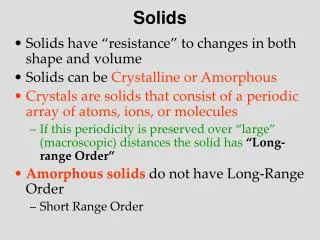
corner (vertex)- a point where two or more sides, surfaces or edges joina face – a flat surface of a 3D shapean edge – the place where two surfaces join
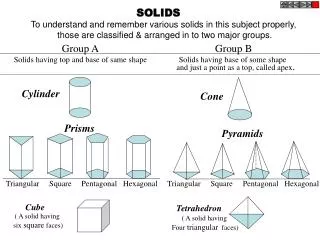
A cube - a solid shape that has 6 square faces all equal in size
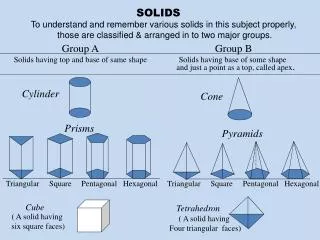
A prism - a solid 3D shape with identical, parallel bases and all other faces are rectangular Cube Square Prism Triangular Prism Pentagonal Prism
A cylinder - a solid shape with one curved surface and two equal circular faces
apex – in a pyramid, the vertex at which all lateral faces meet
collinear points – points that lie on the same line coplanar points – points that lie on the same plane
A cuboid is a box-shaped object. It has six flat sides and all angles are right angles.And all of its faces are rectangles.It is also a prism because it has the same cross-section along a length. In fact it is a rectangular prism.
Polyhedron or Not? • Give it a try! (It’s on the back of your definitions page.) • Then do the practice.
Polyhedra What non-polyhedron figure has a single vertex? cone What non-polyhedron figure has 2 parallel bases that are circles? cylinder What non-polyhedron figure has all its points at the same distance from an interior point? sphere Which polyhedron figure has an apex? pyramid
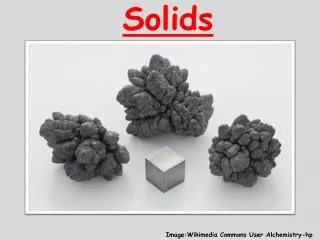
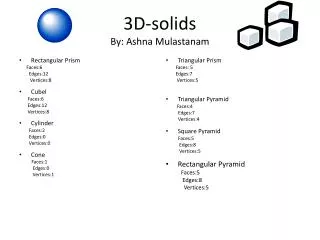
Name these solid shapes SPHERE CUBE CYLINDER CUBOID SQUARE PYRAMID
6 8 12 12 6 8 5 5 8 2 0 0 0 0 0