Integrating Biological and Environmental Data for Global Change Biology Research at UC Berkeley
70 likes | 191 Vues
This initiative at UC Berkeley aims to integrate past, present, and projected future biological and environmental data to advance global change biology research. Utilizing extraordinary resources from the Berkeley Natural History Museums and Field Stations, the project boasts extensive collections, including millions of specimens and measurements. Users can access this wealth of information through our Online Portal, Holos, which offers advanced searching, visualization, and analysis tools, empowering researchers to drive innovative insights in biology and environmental science.


Integrating Biological and Environmental Data for Global Change Biology Research at UC Berkeley
E N D
Presentation Transcript
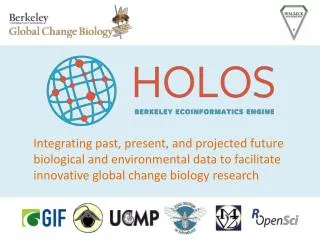
Integrating past, present, and projected future biological and environmental data to facilitate innovative global change biology research
Leveraging UC Berkeley’s exceptional resources Berkeley Natural History Museums • Insects (and their kin) • 6.5 Million specimens (<2.5% digitized) • Fossils • 6.5 Million specimens (<5% digitized) • Vertebrates • 677,000 specimens (100% digitized) • Plants • 2.2 Million specimens (16% digitized) Time scale 1800s present
Leveraging UC Berkeley’s exceptional resources Berkeley Field Stations • Biological observations • Species checklists • Field notes • Photographs • Microclimate sensor arrays • Over 4 million measurements • 48 variables Time scale 1900s present
Leveraging UC Berkeley’s exceptional resources Wieslander Vegetation Type Mapping • Plot data • Vegetation data for 18,000+ plots • Polygon data • Dominant vegetation mapped • Photographs • ~3100 black and white photos • Specimens • ~22,000 specimens collected Time scale 1942 1928 Kelly et al. 2005
Leveraging UC Berkeley’s exceptional resources Sediment Cores • Climatic, floristic, entomological and fire history data from ~50 cores, including Clear Lake Time scale 130,000 ya present
More biological observations • Biocollectionsfrom around the State • Photographs and additional observations collected by various users Pulling data from external sources Freely-available baselayers • Climate • Land cover • Topography • Geology • Soils • Fire frequency • Nature reserves
Users can access data and its metadata via our Online Portal, Holos. Holoscomes with built-in searching, charting, visualization and analysis tools • The Data API’s open framework allows third-party developers to write their own tools. Integrating data within Holos