Mesopotamia
50 likes | 172 Vues
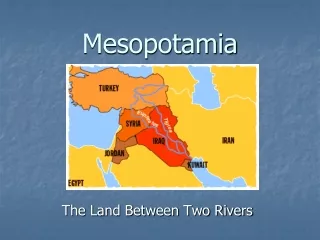
Mesopotamia, nestled between the Tigris and Euphrates rivers, is recognized as the cradle of civilization. The Sumerians were the pioneers, establishing the world's first complex society, notable for significant advancements in agriculture, writing, and governance. As they developed new farming techniques, cities flourished, leading to the creation of institutions that shaped human history. Following the Sumerians, various cultures, including the Babylonians, influenced the region, creating enduring legacies such as codified laws. Explore the foundational elements of these ancient societies and their contributions.


Mesopotamia
E N D
Presentation Transcript
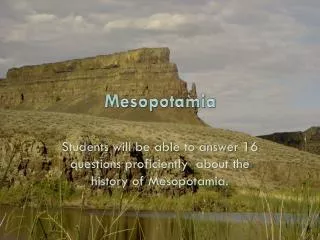
Mesopotamia By: Verduzco, Clow, and Watson
Big Ideas • The valleys of the Tigris and Euphrates rivers were the site of the world’s first civilization • The Sumerians developed the first civilization in Mesopotamia • The Sumerians made many advances that helped their society develop. • After the Sumerians, many cultures ruled parts of the Fertile Cresent.
Main Ideas • New farming techniques led to the growth of cities • The Sumerians created the world’s first advanced society • The Sumerians invented the world’s first writing system. • The Babylonians conquered Mesopotamia and created a code of law
Key Terms • Fertile Crescent- A large arc of rich, or fertile, farmland • Silt- A mixture of rich soil and tiny rocks • Irrigation- A way of supplying water to an area of land • Canals- Human-made water ways • Surplus- or more than they needed • Division of Labor- An arrangement in which each worker specializes
Section 1 • Early settlements in Mesopotamia were located near rivers. • Later, people built canals to protect houses from flooding and move water to their fields. • With irrigation, the people of Mesopotamia were able to grow more food