Introduction to Visual Balance: Principles of Organization in 2D Design
Explore the concept of balance in design, where elements are visually distributed to create equilibrium and stability in a work. Learn about symmetry, approximate symmetry, radial symmetry, and asymmetry, and understand the factors influencing visual weight such as position, size, texture, value, quantity, orientation, and shape. Discover unique types of balance like Crystallographic balance and the Rule of Thirds for creating interesting compositions. Check out practical applications and resources to enhance your understanding of achieving balance in art and design.

Introduction to Visual Balance: Principles of Organization in 2D Design
E N D
Presentation Transcript
Balance • Danielle Bass • Ciara Clauss • Sierra Leitner • Jose Ramos Project 3: Principles of Organization 2D Design | Prof. Jacques | Semester Year
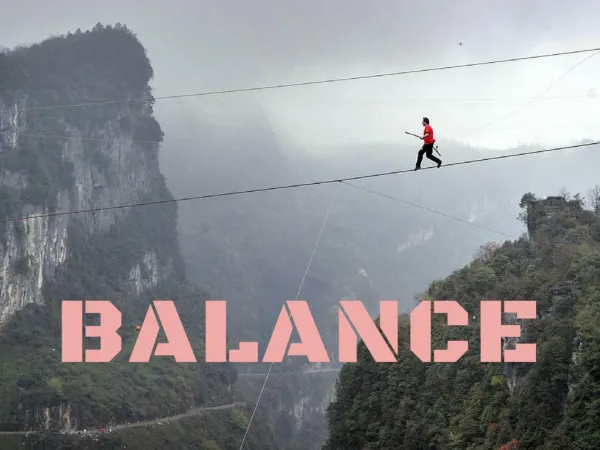
Intro to Balance Balance is achieved when the elements of design are “visually distributed to appear equally weighted”. It provides equilibrium in a work. • Sense of “stability” in the work • Types of balance: symmetry, approximate symmetry, radial symmetry, asymmetry Balance
What influences“visual weight”? • Position • Size • Texture • Value • Quantity • Orientation • Shape Balance
Symmetry • Most formal type of balance • An imaginary line can be drawn through the center of the work - - both sides will be exactly the same Balance
Approximate Symmetry • Similar to regular symmetry, but opposing sides are not perfect mirror images • Slight differences in opposing sides but very similar Balance
Radial Symmetry • Balanced around a central point • Elements are arranged around a center object or point and mirror each other around this point Principle Name
Asymmetry • Unique type of balance • Elements appear imperfect – there is no “imaginary line” or symmetry – but there is still a sense of stability throughout the piece Balance
Balance Applications – Rule of Thirds • Renowned way of achieving balance in a work • Use an imagined grid divided equally into nine squares – focal points of your work should be placed at the intersections of the squares • Creates a more interesting composition! Balance Photos source: http://digital-photography-school.com/rule-of-thirds
Balance Applications – More unique types of balance Crystallographic balance = • “allover pattern” • Elements of equal weight are repeated everywhere • No distinct focal point • Examples: quilts, chessboards Balance
References • http://nwrain.net/~tersiisky/design/balance.html • http://www.claudiajacques.org/2d/balance.pdf • http://www.sophia.org/tutorials/design-in-art-balance-and-contrast Balance
Review • Balance helps create a complete and visually pleasing composition • Remember that balance does not necessarily mean “symmetry”! (imperfect mirror images can still create a unified/stable sense of balance) Balance