Understanding the Big 6: A Comprehensive Approach to Solving Information Problems
"Technology and the Big 6" by Jim Baldoni introduces a structured model designed to help individuals of all ages effectively tackle information problems. This model encompasses six essential stages: Task Definition, Information-Seeking Strategies, Location & Access, Use of Information, Synthesis, and Evaluation. Each stage equips learners with skills to define problems, locate suitable sources, extract relevant information, present findings, and assess the effectiveness of their research process. The Super 3 model is a simplified version for younger learners, focusing on planning, execution, and reflection.

Understanding the Big 6: A Comprehensive Approach to Solving Information Problems
E N D
Presentation Transcript
Technology and the Big 6 By Jim Baldoni
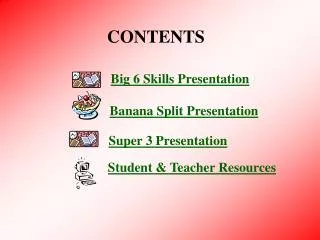
What is the Big 6? • A process model for people of all ages to use in solving an information problem. • Task Definition • Information Seeking Strategies • Location & Access • Use of Information • Synthesis • Evaluation
Task Definition • Define the problem & identify the information needed.
Information Seeking Strategies • Determine all possible sources & select the best sources. • Students demonstrate the ability to generate a list of potential information resources. • These include search tools and other electronic resource. • Students demonstrate the ability to select sources that are suitable to meet the information need
Location & Access • Locate sources and find information within sources. • Students demonstrate the ability to use a search engine on the Internet • Students demonstrate the ability to skim to find the appropriate material on a web site
Use of Information • Engage (e.g., read, hear, view) & extract revelant information • Students demonstrate the ability to interact with a web site. • Students demonstrate the ability to properly cite information resources. • Students demonstrate the ability to cut & paste information from an electronic source into a word processor.
Synthesis • Organize information from multiple sources & present the result. • Students demonstrate the ability to use word processing or multimedia presentation software to arrange information. • Students demonstrate the ability to use PowerPoint to create electronic slide shows. • Students demonstrate the ability to use spreadsheets or other tools to graph data collected during a science experiment.
Evaluation • Judge the result (effectiveness) & the process (efficiency). • Students demonstrate the ability to evaluate multimedia presentations for both content and format. • Students demonstrate the ability to thoughtfully consider how well they were able to use electronic sources throughout their project.
The Super 3 • When working with younger children the simpler form of the Super 3 is used. • Beginning- Plan what you are going to do. • Middle- Do it. • End- Review what you did.
Citation Page Yahoo Trademark Image. [On line Image]. Available http://www.yahoo.com. May 22, 2002 Yahooligans Trademark Image. [On line Image]. Available http://www.yahooligans.com. May 22, 2002 Texas Library Connection Image. [On line Image]. Available http://tlcic.esc20.net/. May 22, 2002 Google Trademark Image. [On line Image]. Available http://www.google.com. May 22, 2002