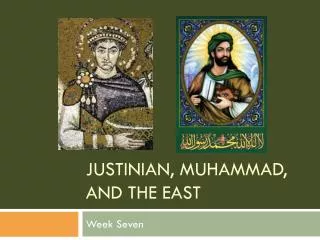
Justinian, Muhammad, and the Rise of Islam: The Interplay of East and West
260 likes | 401 Vues
This study explores the pivotal roles of Justinian and Muhammad in shaping the Eastern world during their eras. Justinian, an all-powerful Byzantine emperor, sought to restore the Roman Empire through territorial re-conquests, the formulation of the Justinian Code, and the establishment of Orthodox Christianity, epitomized by the Hagia Sophia. In contrast, Muhammad's rise and the spread of Islam transformed Arabian society, uniting tribes under the umma, with the adoption of key Islamic tenets. Together, their legacies facilitated cultural and philosophical prosperity, bridging East and West.


Justinian, Muhammad, and the Rise of Islam: The Interplay of East and West
E N D
Presentation Transcript
Justinian, muhammad, and the East Week Seven
graph/gram = write photograph autograph phonograph
tele = far telescope telephone television
Justinian, muhammad, and the East Week Seven
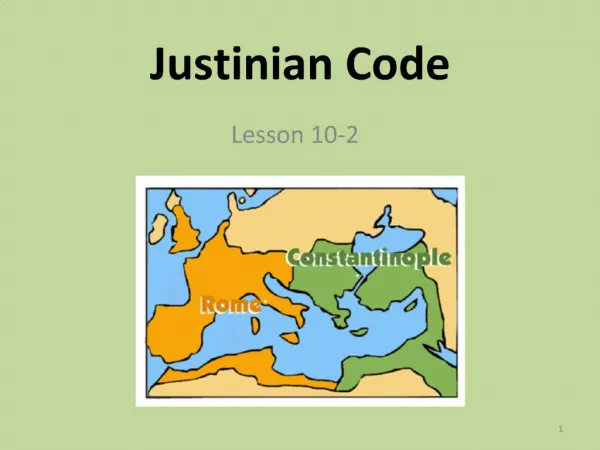
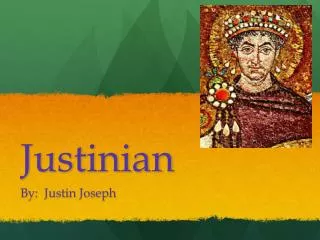
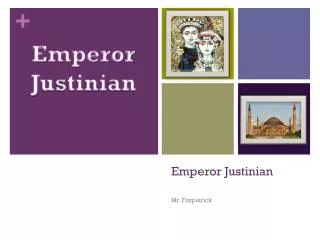
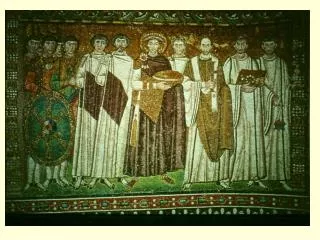
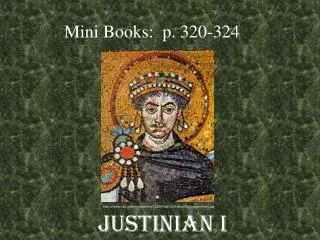
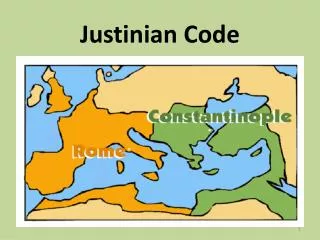
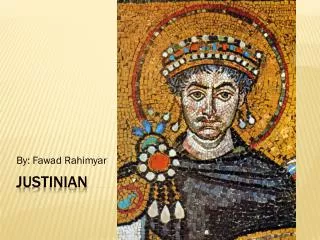
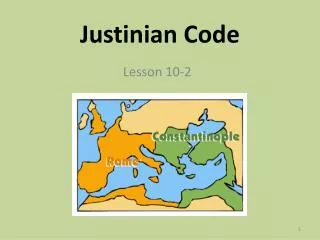
II. The Byzantines A. Justinian and the Creation of the Byzantine State • An all-powerful emperor tries to bring it back together • Re-conquest of territory • Justinian Code • Problem of high taxes Justinian Code
II. The Byzantines B. Orthodox Christianity • Liturgy • Icons • Hagia Sophia • Conversion of the Slavs • Bulwark of Christian Europe Hagia Sophia
phone = sound megaphone symphony telephone
milli = thousand millipede mile millimeter
III. Muhammad and the Rise of Islam A. Arabia before the Prophet • Bedouin nomads: clan survival and the feud • Tribal religion: polytheism and sanctuaries
III. Muhammad and the Rise of Islam B. Muhammad the Prophet • Born in 570 into the Quraysh around the Arabian city of Mecca • Merchant • Prophet
III. Muhammad and the Rise of Islam C. Tenets of Islam • Teachings in the Qur’an • Five Pillars: Faith, prayer, alms-giving, fasting, pilgrimage • Other practices: no alcohol, only limited polygamy, jihad
dece = ten decagon decathlon decapede
sci= know conscience omniscient science
III. Muhammad and the Rise of Islam D. Triumph of Islam • Early opposition • Medina: the uniting of Arabs into a new religious community, the umma • Expansion: jihad against infidels • Attraction: economic incentives and the afterlife Emigration to Medina
III. Muhammad and the Rise of Islam E. After Muhammad • Death and succession • Division • Sunni • Shia • Expansion to Constantinople, China, Spain, and Africa
III. Muhammad and the Rise of Islam F. Pax Arabica 1. Commercial prosperity 2. Cultural prosperity • Philosophy—IbnRushd • Medicine—IbnSina • Mathematics • Architecture—Alhambra IbnRushd
Epilogue • Shared traits of East and West • Internal divisions