Advanced Multiscale Modeling of Materials: Theory, Experiments, and Historical Insights
60 likes | 193 Vues
This work explores the framework of Process-Structure-Property modeling crucial for solving complex engineering problems in materials such as metals, polymers, ceramics, and composites. Emphasizing the importance of historical context in predictions, the models leverage Internal State Variable (ISV) and MultiStage Fatigue (MSF) concepts to achieve a 95% accuracy rate in outcomes, vastly superior to current methodologies. Utilizing Finite Element Analysis (ABAQUS), the study provides practical insights for implementation and validation, highlighting the significance of boundary conditions, loads, and temperature variations in material behavior.


Advanced Multiscale Modeling of Materials: Theory, Experiments, and Historical Insights
E N D
Presentation Transcript
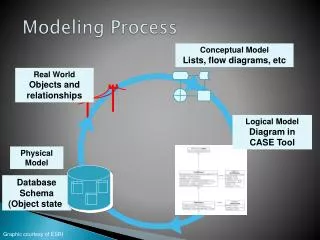
Process-Structure-Property Modeling and the Associated History Requires: 1. theory, 2. computations, and 3. experiments
History is important to predict the future!! 25% wrong answer if history is not considered!! 304L SS
Solving Complex Engineering Problems Metals Polymers Ceramics Composites Biological materials Macroscale Internal State Variable Theory Multiscale Modeling BVP Material Heterogeneities
Macroscale MSU ISV/MSF Models Implementation/Use ISV=Internal State Variable MSF=MultiStage Fatigue mesh initial microstructure- inclusion content MSU MSF Model Finite Element Code (ABAQUS) s, e, f Life MSU DMG model failure Design Note: model can be implemented in other FE codes Multiscale Materials Modeling boundary conditions loads temperature strain rate history Note: the ISV and MSF models give a 95% correct answer where current models in codes give a 50% answer Physics Validation And Numerical Verification