

SlideServe
Menu
Préférences
© SlideServe · v2026

VOLCANO NOTES

jonas-cunningham avatar
17 diapositives · 347 Views · Dec 01, 2014

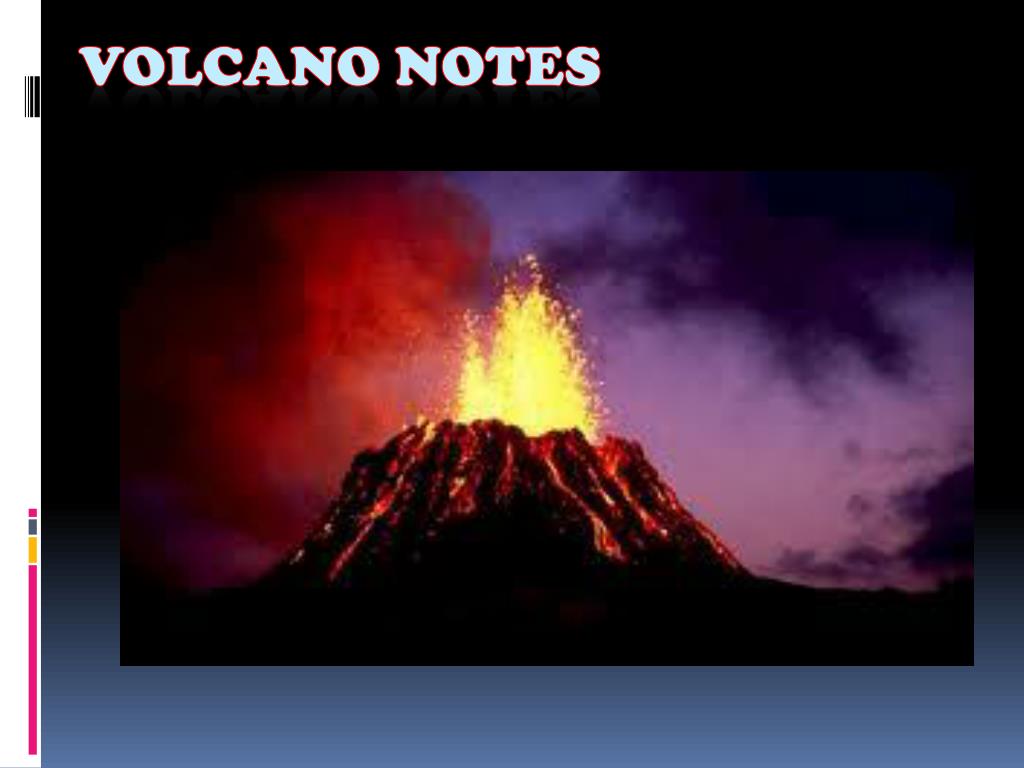
VOLCANO NOTES. A volcano is the landform that develops around an opening in Earth’s crust where magma, gas, and dust comes out. Magma rises because it’s 1. Hot 2. Less Dense than the surrounding materials. 3 Locations for Volcano Formation. Divergent Boundary
VOLCANO NOTES - slide 1
01 / 17VOLCANO NOTES
1 / 17

Télécharger la présentation

VOLCANO NOTES
Une image / un lien ci-dessous est fourni (tel quel) pour télécharger la présentation

Politique de téléchargement : le contenu du site vous est fourni TEL QUEL pour votre information et votre usage personnel ; il ne peut être vendu, concédé sous licence ni partagé sur d’autres sites sans l’accord de son auteur.Le contenu vous est fourni TEL QUEL, pour votre information et votre usage personnel uniquement. Téléchargez la présentation en cliquant sur ce lien. Lors du téléchargement, si vous ne parvenez pas à télécharger une présentation, l’éditeur a peut-être supprimé le fichier de son serveur.Pendant le téléchargement, si vous ne parvenez pas à obtenir une présentation, le fichier a peut-être été supprimé par l’éditeur.

F I N

Plus de contenu associé

Transcription de la présentation
  1. VOLCANO NOTES

  2. A volcano is the landform that develops around an opening in Earth’s crust where magma, gas, and dust comes out. • Magma rises because it’s • 1. Hot • 2. Less Dense than the surrounding materials.

  3. 3 Locations for Volcano Formation • Divergent Boundary • Most of the magma that reaches Earth’s surface comes out at a divergent boundary. • This creates new oceanic crust (sea-floor spreading) • Example: Mid-Ocean Ridge • Subduction Zone • Volcanoes always form on the top plate. • These volcanoes tend to be explosive due to friction. • Examples: Andes Mountains, M t. Saint Helens • Hot Spot • Ex: Hawaii • ***The hot spot does not move as the plate moves across it***

  4. Two Types of Material in Volcanic Eruptions • Lava-liquid rock on the surface • Magma that reaches Earth’s surface • Pyroclastic material • “Pyro”=fireclastic=rock • Blocks-HUGE rocks • Bombs-big rocks • Lapilli-little rocks • Ash

  5. Two Types of Eruptions • Non-Explosive (quiet) • Causes a greater threat to property than human life…why?.....humans can run from it! • Lava Flow- rivers of red hot lava • Lava hardens upon itself • Creates shield volcanoes

  6. Explosive Eruption • Clouds of hot debris and gases shoot out of the volcano at supersonic speeds. • Dust size particles can remain in the air for years in the atmosphere. • Large blasts can demolish rock formations and shrink the volcano instead of helping it to get bigger.

  7. Mt. Saint Helens Before After

  8. Size of explosion depends on how much water there is! Why? • Water turns into vaporSteam • Steam builds pressure • Pressure causes explosions • **Magma with a lot of water will explode!

  9. So let’s review Volcano Vocab… • Magma-hot, molten rock deep within Earth • Lava-magma that erupts and reaches Earth’s surface. • Pyroclastic material- Magma that erupts as fragments of molten rock and solidifies in the air. • Vent-opening in the Earth’s crust where magma reaches the surface. • Caldera-large hole that forms when the roof a volcano collapses.

  10. Crater Lake, Oregon

  11. Types of Lava • Aa (pronounced AH-AH) • very stiff & jagged. Moves slowly. • Pahoehoe- • Ropy, flows like candle wax, shiny surfaces with wrinkles. • Pillow Lava • Forms when lava meets the surface under water and is in the size & shape of a pillow.

  12. 3 types of Volcanoes • Shield Volcanco • Built of out layers of non-explosive eruptions • Lava is very runny (thin) so it spreads out over a wide area • Creates gentle sloping sides. • Formed by hot-spots and divergent boundaries • Example: Mauna Loa (Hawaii-Largest Mountain from the sea floor)

  13. 2. Cinder Cone Volcano • Small volcanic cones made entirely of pyroclastic material from moderate eruptions • Steeper slope, narrow base • Usually only erupt for a short time • Erodes quickly because the material is not cemented together like lava. • Example: Paricutin (Mexico)

  14. 3. Composite Cone Volcano • Aka: STRATOVOLCANO • Most common type of volcano • Explosions of pyroclasticmaterial and lava flow. • Alternating layers of pyroclastic material and lava • Broad bases and sides • Form at subduction boundaries • EXAMPLE: Mt. Fuji (Japan) & Mt. Saint Helens