
SlideServe
Menu
Préférences
© SlideServe · v2026

Ancient Human Remains

joshua avatar
6 diapositives · 396 Views · Jul 30, 2014

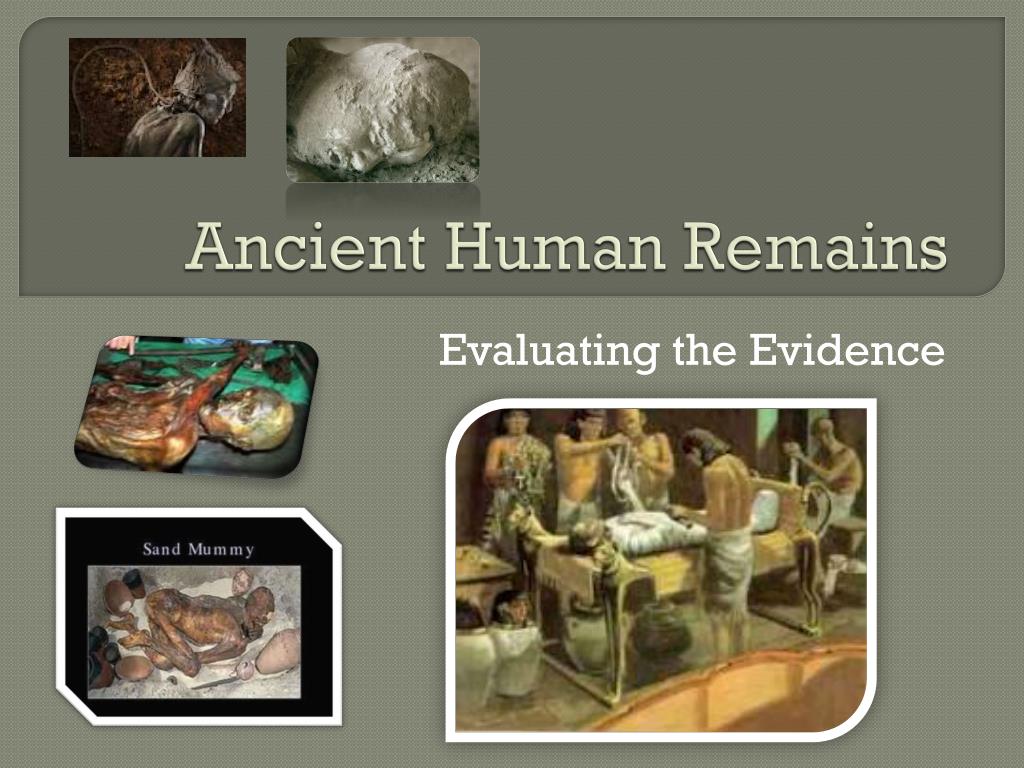
Ancient Human Remains. Evaluating the Evidence. How are bodies preserved?. The Bog Bodies. Research Questions. Tyler & Jordie (antiquity). Sammie (unlocking the past). In which country have most of the bodies been found? What do the bodies have in common? (Table 10.2)
Ancient Human Remains - slide 1
01 / 6Ancient Human Remains
1 / 17

Télécharger la présentation

Ancient Human Remains
Une image / un lien ci-dessous est fourni (tel quel) pour télécharger la présentation

Politique de téléchargement : le contenu du site vous est fourni TEL QUEL pour votre information et votre usage personnel ; il ne peut être vendu, concédé sous licence ni partagé sur d’autres sites sans l’accord de son auteur.Le contenu vous est fourni TEL QUEL, pour votre information et votre usage personnel uniquement. Téléchargez la présentation en cliquant sur ce lien. Lors du téléchargement, si vous ne parvenez pas à télécharger une présentation, l’éditeur a peut-être supprimé le fichier de son serveur.Pendant le téléchargement, si vous ne parvenez pas à obtenir une présentation, le fichier a peut-être été supprimé par l’éditeur.

F I N

Plus de contenu associé

Transcription de la présentation
  1. Ancient Human Remains Evaluating the Evidence

  2. How are bodies preserved?

  3. The Bog Bodies

  4. Research Questions Tyler & Jordie (antiquity) Sammie (unlocking the past) • In which country have most of the bodies been found? • What do the bodies have in common? (Table 10.2) • What were Lindow Man’s injuries? (Profile p.113) • Why might these injuries have been done to Lindow man? (Sources, p.114) • Why is the bread in Lindow’s man stomach important? (p.114) • What was Windeby girl wearing? (p.53) • Look at the writing by Tacitus? (p.53) How does this match with the evidence for Windeby girl? • Why were sacrifices often made in lakes and bogs? • What are some possible explanations for the deaths of the bog bodies?

  5. Who was Otzi? Evidence conclusions Occupation Grain & wheat in containers Dagger with scabbard Tool sharpener Net of grass strings Health Low level lead pollution High cholesterol Technology Skilfully made copper axe Variety of tools Unfinished bow (yew wood) & arrows Lifestyle Degeneration of bone joints Rib fractures Worn teeth (no decay) Tattoos above joints Backpack Ibex bones (dangerous to hunt) Antibiotic Origins Carbon-Dating Copper Axe Contact with farming village suggested; perhaps shepherd or hunter? Seems used to being away for long periods. Lead pollution – mining/ smelting? Meat diet. Access to advanced technology – weapons/tools Variety of woods/plants Self-sufficient? Active, overuse of joints? Dangerous/violent lifestyle? Meat diet, teeth used for other purposes (toolmaking?) Treatment for joint pain? Used to being away from home/ prepared for wounds Neolithic Age (3360-3040BC)

  6. Who was Otzi?