
SlideServe
Menu
Préférences
© SlideServe · v2026

Sequence-Structure-Function

justin avatar
27 diapositives · 786 Views · Sep 02, 2014

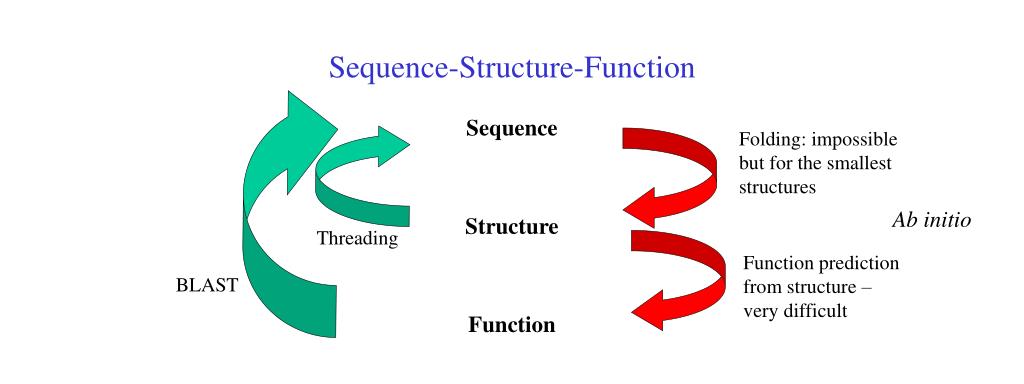
Sequence-Structure-Function. Sequence Structure Function. Folding: impossible but for the smallest structures. Ab initio. Threading. Function prediction from structure – very difficult. BLAST. Experimental. Structural genomics Functional genomics Protein-protein interaction
Sequence-Structure-Function - slide 1
01 / 27Sequence-Structure-Function
1 / 17

Télécharger la présentation

Sequence-Structure-Function
Une image / un lien ci-dessous est fourni (tel quel) pour télécharger la présentation

Politique de téléchargement : le contenu du site vous est fourni TEL QUEL pour votre information et votre usage personnel ; il ne peut être vendu, concédé sous licence ni partagé sur d’autres sites sans l’accord de son auteur.Le contenu vous est fourni TEL QUEL, pour votre information et votre usage personnel uniquement. Téléchargez la présentation en cliquant sur ce lien. Lors du téléchargement, si vous ne parvenez pas à télécharger une présentation, l’éditeur a peut-être supprimé le fichier de son serveur.Pendant le téléchargement, si vous ne parvenez pas à obtenir une présentation, le fichier a peut-être été supprimé par l’éditeur.

F I N

Plus de contenu associé

Transcription de la présentation
  1. Sequence-Structure-Function Sequence Structure Function Folding: impossible but for the smallest structures Ab initio Threading Function prediction from structure – very difficult BLAST

  2. Experimental • Structural genomics • Functional genomics • Protein-protein interaction • Metabolic pathways • Expression data

  3. Protein function groups • Catalysis (enzymes) • Binding – transport (active/passive) • Protein-DNA/RNA binding (e.g. histones, transcription factors) • Protein-protein interactions (e.g. antibody-lysozyme) • Protein-fatty acid binding (e.g. apolipoproteins) • Protein – small molecules (drug interaction, structure decoding) • Structural component (e.g. -crystallin) • Regulation • Signalling • Transcription regulation • Immune system • Motor proteins (actin/myosin)

  4. Energy difference upon binding Examples of protein interactions (and functional importance) include: • Protein – protein (pathway analysis); • Protein – small molecules (drug interaction, structure decoding); • Protein – peptides, DNA/RNA  (function analysis) The change in Gibb’s Free Energy of the protein-ligand binding interaction can be monitored and expressed by the following;  G =  H - T x S      (H=Enthalpy, S=Entropy and T=Temperature)

  5. Protein function • Many proteins combine functions • Some immunoglobulin structures are thought to have more than 100 different functions (and active/binding sites) • Alternative splicing can generate (partially) alternative structures

  6. Protein function Protein-protein interaction Active site / binding cleft Shape complementarity

  7. Protein function evolution Chymotrypsin

  8. How to infer function • Experiment • Deduction from sequence • Multiple sequence alignment – conservation patterns • Homology searching • Deduction from structure • Threading • Structure-structure comparison • Homology modelling

  9. Mevalonate plays a role in epithelial cancers: it can inhibit EGFR

  10. Metabolic networksGlycolysis and Gluconeogenesis Kegg database (Japan)

  11. Gene Ontology (GO) • Not a genome sequence database • Developing three structured, controlled vocabularies (ontologies) to describe gene products in terms of: • biological process • cellular component • molecular function in a species-independent manner

  12. The GO ontology

  13. Gene Ontology Members