Understanding Igneous Intrusions: Viscosity, Pressure, and Magma Dynamics
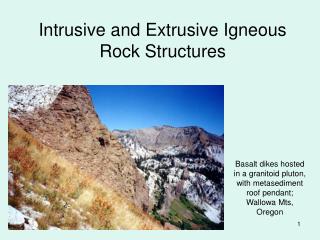
This article explores the intricacies of igneous intrusive structures, emphasizing the role of viscosity in the flow of magma and the pressures involved in geological processes. We delve into the differences between viscous and pseudoviscous materials, and how pressure influences melting and magma buoyancy. Insight into the dynamics of volcanic eruptions and the weight dynamics between rock and magma are presented, along with case studies from significant geological formations in Scotland, California, and Wyoming.


Understanding Igneous Intrusions: Viscosity, Pressure, and Magma Dynamics
E N D
Presentation Transcript
Viscosity • Units: pascal-seconds (kg/m-sec) • How many pascals pressure x how many seconds to squash fluid flat? • Viscous: Material flows as long as pressure is applied, however small • Pseudoviscous: Material flows after some threshold stress
What Drives Magma? • Magma is typically 10% lighter than equivalent solid rock • Why pressure inhibits melting • Buoyancy drives magma upward • Weight of rock around volcanic conduit > weight of magma • Gas pressure powers volcanic eruptions • Mafic (dense) rocks can sink in crust by viscous flow