The Discovery and Structure of Cells: Insights into Cell Theory and Function
Explore the groundbreaking discoveries by early scientists like Robert Hooke and Anton van Leeuwenhoek that laid the foundation for cell theory. Learn how observations of cells led to the understanding that all organisms are made up of cells, which serve as the basic units of structure and function. Delve into the differences between prokaryotic and eukaryotic cells, their various shapes and sizes, and how cell size affects functionality. Discover the roles of cellular components, including the plasma membrane, nucleus, and organelles, in maintaining life.

The Discovery and Structure of Cells: Insights into Cell Theory and Function
E N D
Presentation Transcript
Discovery of cells • Early scientists had to make their own microscopes • Better microscopes = better knowledge of microscopic life • Robert Hooke • Observed cork slides • Observed ‘cells’ (like where monks live) • Anton van Leeuwenhoek (10x Hooke’s magnification) • Observed algae and ‘animalcules’ (protists)
Other scientists • Mathias Schleiden • Plants are made of cells • Theodor Schwann • Animals are made of cells • Rudolf Virchow • Cells come from other cells • What is the importance of all of these observations?
Cell theory • All organisms are made of one or more cells • Cells are the basic units of structure and function in an organism • Cells come from pre-existing cells
Cell size • Cells come in many shapes and sizes • Size of a cell is limited by its surface area-to-volume ratio • As a cell grows, volume increases much faster than surface area • If a cell gets too big, materials entering and leaving a cell would not be transported fast enough = cell would starve
Cell size Working in pairs, consider two cubes, one with a side that is 1 cm long and the other with a side that is 6 cm long. For each cube calculate: 1. Surface area (= height × width × number of sides) 2. Volume (= height × width × length) 3. Surface area-to-volume ratio (= surface area:volume) What pattern do you observe as the size of the cube increases? What inferences can you make regarding cell size? Take a few minutes to discuss, and then present your conclusions to the class.
Answers • Surface area = 6 cm2for the first cube and 216 cm2 for the second cube • Volume = 1 cm3for the first cube and 216 cm3 for the second cube • Surface area:volume= 6:1 for the first cube and 1:1 for the second cube • As the cube size increases, the surface area to volume ratio decreases. • These calculations show why most cells are small (cells must maintain a large surface area to volume ratio in order to function).
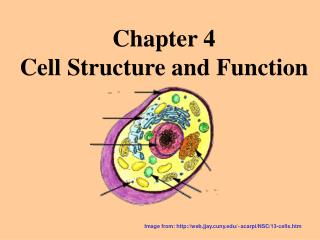
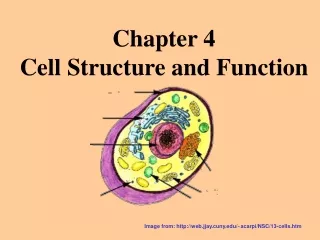
Parts of a cell • Plasma membrane • aka: Cell membrane • Cell’s outer surface • Barrier • Regulate movement of materials in/out of cell • Cytoplasm: fluid portion of cell • Contains all organelles • NUCLEUS • Control center • Where DNA is located • Or floating in cytoplasm All cells have these 3 parts.
Two types of cells • Prokaryotes: lack a nucleus and membrane-bound organelles • Pro- before • Kary- nucleus • Contain a nucleoid: region where DNA is concentrated • *not an organelle • Bacteria and Archea
Two types of cells • Eukaryotes: have a nucleus and membrane-bound organelles • Eu- true • Organelles: well defined; intracellular bodies that perform specific functions • All are enclosed in a membrane • Generally larger than prokaryotes
Cellular organization • Multicellularity found in more advanced species • Tissue: groups of cells that do a specific job • Organs: tissues that perform a particular job • Organ systems: group of organs that accomplish a related task
Plasma membrane (aka: Cell Membrane) The “GATE-KEEPER” • Location: • Surrounds the cell • Functions: • Allows only certain molecules to enter/exit a cell • Separates internal metabolism from external environment • Present in ANIMAL & PLANT cells
Plasma Membrane • Composed of a phospholipid bilayer: double layered membrane of phospholipids • Phospholipids • Polar (hydrophillic) heads – oriented to H2O • Nonpolar (hydrophobic) tails – orient away from H2O POLAR NONPOLAR
Membrane components • Many proteins are embedded in plasma membrane • Receptor proteins: recognize and bind to substances outside of cell • Enzymes: assist chemrxns • Transport proteins: help substances move across membrane • Fluid mosaic model: phospholipid bilayer behaves like a fluid more than a solid • Lipids and proteins can move around w/in membrane
Nucleus Control Center • Houses and protects genetic information • When cell is not dividing, DNA is in chromatin form • Threadlike material • When cell is dividing, DNA is condensed into chromosomes • DNA surrounded by proteins CHROMOSOME
Nuclear envelope • Double membrane surrounding nucleus • Nucelar pores regulate movement of materials in/out of nucleus
Nucleolus • Nucleolus: structure inside nucleus • Location of ribosomal RNA (rRNA) synthesis • Ribosomes: cell structure responsible for protein sysnthesis • Composed of rRNA
Mitochondria Powerhouse • Double-membraned organelle responsible for energy conversion • Organic molecules (glucose + O2) ATP • Inner membrane has many folds cristae • More surface are = more ATP production • Have their own DNA • Believed to have originated from prokaryotic cells that were incorporated into ancient eukaryotic cells • Symbiotic relationship (both benefit)
Endoplasmic reticulum (ER) Freeway • System of membranous tubes and sacs • 2 types • Rough (RER): • Attached ribosomes protein synthesis • Smooth (SER): • No ribosomes • Tubular appearance • Lipid and steroids synthesis
Golgi Apparatus Packaging Center • Location: in cytoplasm • Function: • package and modify proteins or lipids as they pass them from sac to sac • “address labels” • A & P • Double membrane
Lysosomes Suicide Sacs • Location: in cytoplasm • Function: • Contain digestive enzymes to break down macromolecules • WBC’s >> break down bacteria • Autophagy: = digestion of old organelles • Autolysis = Cells broken down by their own lysosomes • A & P • Double membrane
Peroxisomes • Location: in cytoplasm (especially in liver and kidney cells) • Function: • Similar to lysosomes; contain different enzymes • Neutralize free radicals (damaging Oxygen ions) • Detoxify alcohol and other drugs • Produce H2O2 (hydrogen peroxide) • A & P • Double membrane
*PROTEIN SYNTHESIS • Ribosomes (on Rough ER) make proteins. • Vesicles transport proteins to Golgi apparatus. • Golgi modifies and packages proteins in new vesicles. • Vesicles release proteins that are needed OUTSIDE the cell. • Vesicles with ENZYMES stay inside the cell as • Lysosomes • Peroxisomes • Endosomes
CYTOSKELETONMicrotubules • Small hollow tubes anchored near nucleus • Location: cytoplasm • Function: • Hold organelles in place • Maintain cell shape • “tracks” to guide movement of organelles and molecules within cell • A & P
CYTOSKELETONMicrofilaments • Small threads wrapped around each other • Location: cytoplasm • Function: • Cell movement • Muscle contraction • WBC crawl • A & P
CYTOSKELETONIntermediate Filaments • Location: nucleus & cytoplasm • Function: • Anchor nucleus & some organelles • Maintain shape of nucleus • A & P
Cilia & Flagella • Location: surface of cell • Function: • Assist in movement • CILIA = tiny hairs • FLAGELLA = tails • Made of microtubules • A & P
Centrioles • Location: cytoplasm • Function: • Assist in MITOSIS (cell division) • Made of microtubules • A
PLANT CELLSCell Wall • Location: OUTSIDE plasma membrane • Made of CELLULOSE (carbohydrate) • Function: • Form rigid wall • Helps cells maintain same shape • P • Double membrane sometimes if secondary cell wall forms (i.e. wood)
PLANT CELLSCentral Vacuole • Location: Cytoplasm • Function: • Acts as a reservoir for large amounts of water • Also: enzymes, wastes, etc. • When empty, plant wilts. • P • Single membrane
PLANT CELLSChloroplasts • Similar to mitochondria • Contain own DNA • Location: Cytoplasm • Function: • PHOTOSYNTHESIS • Light energy converted into chemical energy (glucose) • *Contain green pigment • P • Double membrane
PLANT CELLSChromoplasts & other plastids • Location: Cytoplasm • Function: • Give color to plants • Carrots = orange pigment • Daisies = yellow pigment • A & P • Double membrane