Cell Structure and Function
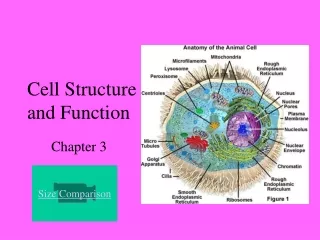
Explore the milestones in cell biology through the contributions of pioneering scientists such as Robert Hooke, Anton van Leeuwenhoek, Matthias Schleiden, and Theodor Schwann. Delve into the significance of their work in the development of cell theory, which posits that all living organisms are composed of cells. Learn about cell structure, organelles, and the functions of molecules such as nucleic acids, proteins, and lipids. Understand the mechanisms of transport across cell membranes and the role of organelles in eukaryotic cells, their unique characteristics, and the evolutionary perspectives on cell formation.

Cell Structure and Function
E N D
Presentation Transcript
Scientists responsible for the tools and foundations of cell biology: Robert Hooke
Scientists responsible for the tools and foundations of cell biology: Anton van Leeuwenhoek
Scientists responsible for the tools and foundations of cell biology: Matthias Schleiden
Scientists responsible for the tools and foundations of cell biology: Theodor Schwann
Scientists responsible for the tools and foundations of cell biology: Robert Brown
Scientists responsible for the tools and foundations of cell biology: Rudolf Virchow
Cell Theory The work of these scientists provided information significant to the development of the cell theory All living organisms are alike because they are composed of cells … by studying the composition and chemistry of the cell, we understand the chemistry and composition of all kinds of life forms
Cell parts come from molecules 4 Types of Organic Molecules: Nucleic Acids - - Carbohydrates - - Proteins - - Lipids - -
Cell Membrane Function: - - - * - * *Transport Mechanisms
Cell Membrane Phospholipid Bilayer … …fluid mosaic model = Proteins … … Carbohydrates … (cholesterol) …
Nucleus Functions: - - = CHROMATIN - CHROMOSOMES
Nucleus - - Nucleolus: - - , -
Cell Fluids Plasm = Cyto = _________plasm: Inside of the nucleus _______plasm: Outside of the nucleus
Cytoplasm Organelles in the cytoplasm of ______eukaryotic cells: Ribosomes Endoplasmic Reticulum Golgi Apparatus Lysosomes Cytoskeleton Vacuoles Mitochondria Organelles in _______eukaryotic cells: Choloroplasts Cell Wall Flagella Cilia Centrioles
Ribosomes -Tiny structure where _________are assembled from ____________
Endoplasmic Reticulum - ___________ – ______________attached, __________appearance ___________ – no _______________, _________ appearance
Golgi Apparatus - Produces __________, __________, and __________
Lysosome, Vacuoles, and Vesicles: Lysosome: Vacuoles and Vesicles: - - -In plants, - -
Cytoskeleton _____________and __________ network that provides a ____________ Movement of ___________ inside cell Movement of the _____________
Mitochondrion Contain their own ____ -
Chloroplasts Contain their own ____ -
Cell Walls - - In plants, composed of ________ In fungi, composed of ________
Flagella ____________ structures used for _____________
Cilia ________, __________ structures on the surface of the cell used for ______________
Centrioles Only in _________ cells Used in _____ __________
How did the first cells form? Oparin – Haldane Hypothesis ( ’s) - - : Methane (CH4) Hydrogen gas (H2) Ammonia gas (NH3) Water vapor (H2O) Very Little Oxygen!! - : volcanic eruptions UV radiation lightning meteor bombardment -
Testing the Hypothesis Stanley Miller ( ) - - - !!! ___________ - Molecules + Energy =
Results = Theory of How Earth’s Life Began Evidence: - - - - - These have all been recreated in the laboratory. All the steps to making simple cells have been recreated under lab conditions!! Molecules of _________
Conclusion = Theory of How Earth’s Life Began 1.) 2.) 3.) 4.)
Endosymbiont Hypothesis Lynn Margulis proposed …Eukaryotic cell is the result of
Prokaryotes vs. Eukaryotes Eukaryotic Cells - - - Ex. – - Prokaryotic Cells - - - Ex. – -
5 Kingdom ClassificationCellular Differences Prokaryotic – Reproduce by Ex. Eukaryotic – - Ex. Eukaryotic – Cell Wall composed of Saprophytic ( ) - Ex. Eukaryotic – Cell Wall composed of Autotrophic – - Eukaryotic – Heterotrophic – - -