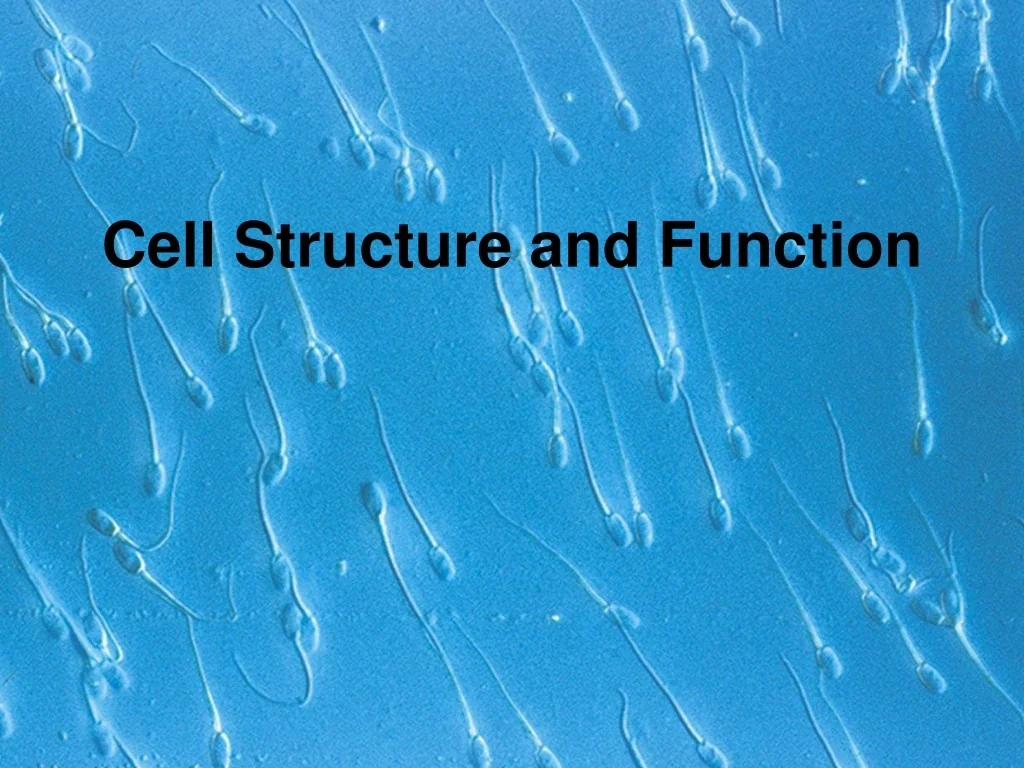
Cell Structure and Function. Agre and cells in the news. Cells. Smallest living unit Most are microscopic. Discovery of Cells. Robert Hooke (mid-1600s) Observed sliver of cork Saw “row of empty boxes” Coined the term cell Anton van Leeuwenhoek was first to view organism (living things)
Une image / un lien ci-dessous est fourni (tel quel) pour télécharger la présentation
Politique de téléchargement : le contenu du site vous est fourni TEL QUEL pour votre information et votre usage personnel ; il ne peut être vendu, concédé sous licence ni partagé sur d’autres sites sans l’accord de son auteur.Le contenu vous est fourni TEL QUEL, pour votre information et votre usage personnel uniquement.Téléchargez la présentation en cliquant sur ce lien.Lors du téléchargement, si vous ne parvenez pas à télécharger une présentation, l’éditeur a peut-être supprimé le fichier de son serveur.Pendant le téléchargement, si vous ne parvenez pas à obtenir une présentation, le fichier a peut-être été supprimé par l’éditeur.
Cells • Smallest living unit • Most are microscopic
Discovery of Cells • Robert Hooke (mid-1600s) • Observed sliver of cork • Saw “row of empty boxes” • Coined the term cell • Anton van Leeuwenhoek • was first to view organism (living things) • used a simple, handheld microscope to view pond water & scrapings from his teeth
Cell theory • (1839)Theodor Schwann & Matthias Schleiden “ all living things are made of cells” • (50 yrs. later) Rudolf Virchow “all cells come from cells”
Principles of Cell Theory • All living things are made of cells • Smallest living unit of structure and function of all organisms is the cell • All cells arise from preexisting cells (this principle discarded the idea of spontaneous generation)
ENDOSYMBIOTIC THEORY • In 1970, American biologist, Lynn Margulis, provided evidence that some organelles within cells were at one time free living cells themselves • Supporting evidence included organelles with their own DNA • Chloroplast and Mitochondria
Characteristics of All Cells • A surrounding membrane • Protoplasm – cell contents in thick fluid • Organelles – structures for cell function • Control center with DNA
Organelles • Cellular machinery • Two general kinds • Derived from membranes • Bacteria-like organelles
Bacteria-Like Organelles • Derived from symbiotic bacteria • Ancient association • Endosymbiotic theory • Evolution of modern cells from cells & symbiotic bacteria
Phospholipids • Polar • Hydrophylic head • Hydrophobic tail • Interacts with water
Movement Across the Plasma Membrane • A few molecules move freely • Water, Carbon dioxide, Ammonia, Oxygen • Carrier proteins transport some molecules • Proteins embedded in lipid bilayer • Fluid mosaic model – describes fluid nature of a lipid bilayer with proteins
Membrane Proteins 1. Channels or transporters • Move molecules in one direction 2. Receptors • Recognize certain chemicals
Membrane Proteins 3. Glycoproteins • Identify cell type 4. Enzymes • Catalyze production of substances
Cell Walls • Found in plants, fungi, & many protists • Surrounds plasma membrane
Cilia & Flagella • Provide motility • Cilia • Short • Used to move substances outside human cells • Flagella • Whip-like extensions • Found on sperm cells • Basal bodies like centrioles
Nucleus • Control center of cell • Double membrane • Contains • Chromosomes • Nucleolus
Nuclear Envelope • Separates nucleus from rest of cell • Double membrane • Has pores
DNA • Hereditary material • Chromosomes • DNA • Protiens • Form for cell division • Chromatin
Nucleolus • Most cells have 2 or more • Directs synthesis of RNA • Forms ribosomes
Endoplasmic Reticulum • Helps move substances within cells • Network of interconnected membranes • Two types • Rough endoplasmic reticulum • Smooth endoplasmic reticulum
Rough Endoplasmic Reticulum • Ribosomes attached to surface • Manufacture protiens • Not all ribosomes attached to rough ER • May modify proteins from ribosomes
Smooth Endoplasmic Reticulum • No attached ribosomes • Has enzymes that help build molecules • Carbohydrates • Lipids
Golgi Apparatus • Involved in synthesis of plant cell wall • Packaging & shipping station of cell
Golgi Apparatus Function 1. Molecules come in vesicles 2. Vesicles fuse with Golgi membrane 3. Molecules may be modified by Golgi
Golgi Apparatus Function (Continued) 4. Molecules pinched-off in separate vesicle 5. Vesicle leaves Golgi apparatus 6. Vesicles may combine with plasma membrane to secrete contents
Lysosomes • Contain digestive enzymes • Functions • Aid in cell renewal • Break down old cell parts • Digests invaders
Vacuoles • Membrane bound storage sacs • More common in plants than animals • Contents • Water • Food • wastes
Bacteria-Like Organelles • Release & store energy • Types • Mitochondria (release energy) • Chloroplasts (store energy)
Mitochondria • Have their own DNA • Bound by double membrane
Mitochondria • Break down fuel molecules (cellular respiration) • Glucose • Fatty acids • Release energy • ATP
Chloroplasts • Derived form photosynthetic bacteria • Solar energy capturing organelle
Connexion au compte
Connectez-vous pour publier votre contenu sur SlideServe.