Roman Houses
100 likes | 241 Vues
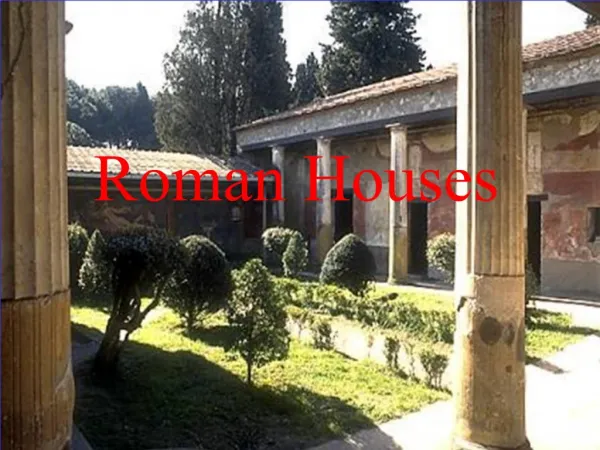
Roman houses, often stark and close to the street, initially welcomed visitors through a narrow hallway called the vestibulum, reminiscent of a throat. This area was richly adorned with artworks illustrating themes of welcome, along with cautionary figures like guard dogs. Key rooms within the house include the atrium (the central hall), cubiculum (bedroom), tablinum (study), and triclinium (dining room). Each space served distinct functions, reflecting the daily life and culture of ancient Rome, blending practicality with decorative artistry.


Roman Houses
E N D
Presentation Transcript
Roman Houses By Iulia Angotti, Brittania Kach, Angelo Bruno
Main Layout of a Roman House CB CB TR P V A TA CB CB C
Vestibulum Roman houses were normally bleak and close to the road. When a person would first enter a house, they would see a long narrow hallway called the vestibulum, or sometimes known as the throat. The hallway was elaborately decorated with depictions of both good – such as welcome , or bad – a guard dog.