Download

1 / 8
80 likes | 190 Vues
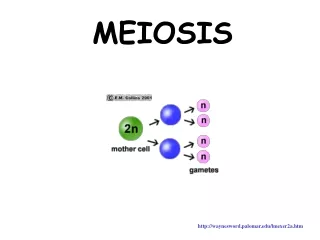
Meiosis is a crucial biological process that reduces the chromosome number by half, producing haploid cells from diploid cells. It consists of two divisions: Meiosis I and Meiosis II. In Meiosis I, one diploid cell (2n) divides into two haploid cells (n), while in Meiosis II, these haploid cells further divide into a total of four haploid cells, each containing unique genetic material. Crossing over during Prophase I increases genetic variation, making offspring genetically diverse. Understanding meiosis is essential for studying heredity and evolution.

E N D
Meiosis Section10.2
Diploid and haploid cells • In the body cells of animals and most plants, chromosomes occur in pairs. • A cell with two of each kind of chromosome is called a diploid cell and is said to contain a diploid, or 2n, number of chromosomes. • A cell containing one of each kind of chromosome is called ahaploidcell and is said to contain a haploid, or n, number of chromosomes.
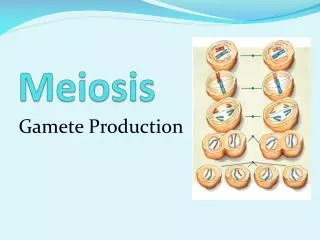
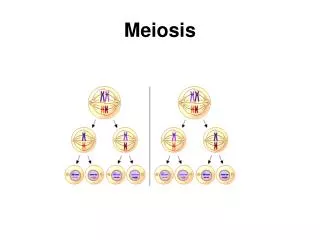
Meiosis consists of two separate divisions, known as meiosis I and meiosis II. • Meiosis I begins with one diploid (2n) cell. • By the end of meiosis II, there are four haploid (n) cells.
Process of Meiosis • Meiosis I – begins with 1 cell 46 chromosomes (in humans) • Prophase I (DNA pairs have doubled) • Crossing over occurs • Metaphase I • Anaphase I • Telophase I • Ends with two cells • With 23 chromosomes each
Process of Meiosis • Meiosis II • 2 Daughter cells 23 -sister chromatids • Prophase II (NO DNA doubling) • Metaphase II • Anaphase II (Sister Chromatids split in half) • Telophase II • Ends with 4 daughter cells 23 single chromosomes • Each different from each other
Crossing over • Chromosomes exchange pieces during meiosis I • Gives offspring more genetic variance • Offspring are different