Understanding the Human Hand: Anatomy, Function, and Common Injuries
The human hand is a remarkable structure, with 27 bones and over 30 muscles facilitating its movement. Essential for daily tasks and hobbies, hands play a vital role in our lives. However, they are susceptible to injuries like fractures and sprains, especially in accidents. Notably, one-fourth of all bones in the human body are located in the hands. As we age, our hands grow larger, and interestingly, popping knuckles releases nitrogen bubbles that create sound. Learn more about the anatomy and functions of the human hand.

Understanding the Human Hand: Anatomy, Function, and Common Injuries
E N D
Presentation Transcript
Human Hand By Jonathan Green
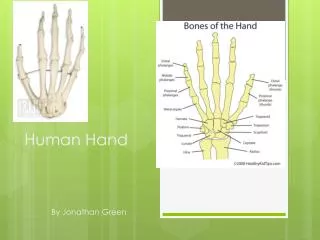
There are 27 bones and more than 30 muscles in each hand. • The hand bones and muscles help us hold items.
The skeletal system and the muscular system help the hand move and do its job like picking things up and latching on to items.
We all need two human hand’s for every day jobs and hobbies.
You can break, sprain or fracture the bones in your hand if you fall on it the wrong way. • This elderly women fell out of her chair and most likely broke or badly sprained her hand. • One-fourth of all of the bones are in your hands.
When you are born your hand has 26 bones. • When you turn into a adult you have 27 bones. • As you age your hand grows larger.
There are 4 nerves coming into the general area of the hand. • The ganglion bone is a mass of nerve tissue existing outside the central nervous system.
When you pop your knuckle joints, they release small bubbles of Nitrogen, which creates the small popping sounds that you hear.