Download
1 / 19
190 likes | 308 Vues
This overview explores the tumultuous history of absolute monarchs in Europe, focusing on the pivotal roles of Henry IV, Louis XIII, and Louis XIV. It highlights the catastrophic effects of religious wars, such as the St. Bartholomew’s Day Massacre and the Thirty Years’ War, while examining attempts at political consolidation, including the Edict of Nantes and Cardinal Richelieu’s strategies. The narrative captures Louis XIV's iconic declaration, "I am the state!" and the transformation of France into a powerful nation, alongside the consequences of these monarchs' reigns on the European political landscape.

E N D
Absolute monarchs in europe By. Janine Hepler
Religious wars create crisis • Fighting b/t French Catholics & Huguenots • St. Bartholomew’s Day Massacre • Henry IV took steps to end figthing • Huguenots: French Protestants
Henry IV’s Efforts in france • Gave up Protestantism & became Catholic • “Paris is well worth a mass” • Established the Edict of Nantes • Devoted his reign to rebuilding France & its prosperity Edict of Nantes • Declaration of religious toleration • Allowed Huguenots to live & worship peacefully in France • Henry IV was killed by a fanatic
Louis XII & Cardinal Richelieu • Henry IV’s son (Louis XII) took the thrown after his death • Weak king • Appointed Cardinal Richelieu minister—in effect served as the ruler of France
Richelieu’s Efforts in France • Increased the power of the Bourbon Dynasty • Ambitious Catholic politician • Involved France in the 30 Years’ War • Moved against the Huguenots—forbade Protestant cities from having walls • Weakened the nobles’ power—outlawed fortified castles & increased the power of the middle class
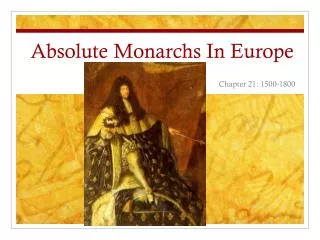
Louis XIV • Most powerful ruler in French history • Declared “I am the state!” • Began his reign at age 5
Cardinal Mazarin • Richelieu’s successor • Ruled France until Louis XIV was 23 • Greatest triumph: ended the 30 Years’ War making France the most powerful country in Europe • Hated by many nobles • Increased taxes • Strengthened the central government
Anti-Mazarin rebellions • Violent riots tore through France • Threatened King Louis XIV’s life • Ultimately failed for 3 reasons Why Rebellions Failed • Leaders distrusted each other • The government used violent repression • Ultimately peasants & townspeople accepted oppressive laws—tired of fighting
Louis XIV takes control • Took the thrown when Mazarin died • Further weakened the power of the nobles—excluded them from his councils • Increased the power of government agents (intendants) • Communicated regularly with local governments
Jean baptistecolbert • Minister of Finance under Louis XIV • Believed in the theory of mercantilism • Wanted to prevent wealth from leaving France
Colbert’s efforts in france • Wanted to make France self-sufficient • Expanded manufacturing by giving funds & tax benefits to French companies • Protected French industries by imposing high tariffs • Encouraged the growth of France’s colony in Canada
Causes of the thirty years’ war • Tension b/t Catholic & Lutheran Princes in Germany • Fear of the spread of Calvinism • Ferdinand’s attempt to limit Protestantism • Ferdinand’s attempt to crush a Protestant revolt in Bohemia
Consequences of the Thirty years’ war & the treaty of westphalia • Devastated Germany—didn’t become a unified state until the 1800s • Weakened the Hapsburg states of Spain & Austria • Strengthened France—received German territory • Ended religious wars in Europe • Marked the beginning of the modern state system
European economies Western Europe Central Europe Feudal Dependent on serf labor Untouched by the Commercial Revolution • Commercial • Capitalistic
Central european empires • Weak • Strong landowning nobles hindered the development of a strong monarchy • The Holy Roman Empire was weakened by the Thirty Years’ War
Steps to hapsburg power • Reconquered Bohemia during the Thirty Years’ War • Wiped out Protestantism • Created a loyal Czech nobility • Centralized the government & created a standing army (after the war)
Building up the hohenzollerns state • Created a strong standing army • Created a military state • Bought the loyalty of the Junkers—gave landowning nobility exclusive right to be officers in the army • Weakened representative assemblies • Took over Silesia