Understanding Watersheds: Key Concepts and Terms Explained
This text provides an overview of critical vocabulary related to watersheds, including definitions of essential terms such as drainage basin, elevation, topographical map, divide, headwaters, tributary, floodplain, sediments, erosion, deposition, meander, oxbow lake, mouth, and delta. Each term enhances understanding of how watersheds function and their significance in the hydrological cycle. These definitions help illustrate the dynamic interactions between water systems and the surrounding land, making them crucial for environmental studies.

Understanding Watersheds: Key Concepts and Terms Explained
E N D
Presentation Transcript
Watersheds Vocabulary Snapshots
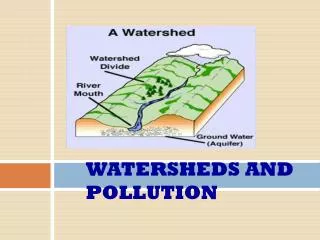
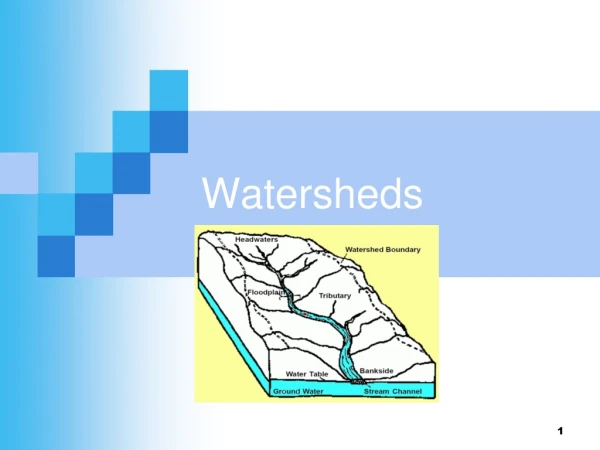
watershed • The land area that supplies a river system • A.K.A drainage basin
elevation • Level of height above sea level
Topographical map • A map that uses contour lines to show the changing elevations of an area on the Earth’s surface • A.K.A. relief map
Divide • A ridge of land that separates one watershed from another
headwaters • The many small streams that come together at the source (start of river)
tributary • A smaller stream that feeds into a main river
Flood plain • A broad flat valley through which a river flows
sediments • The particles of rocks and soil are broken off from the ground surface and carried away
erosion • The process by which fragments of soil and rock are broken off from the ground and carried away
Deposition • The process by which soil and rock are deposited in a new location
meander • A looping curve formed in a river as it winds through its flood plain
Oxbow lake • the crescent-shaped, cutoff body of water that remains after a river carves a new channel
mouth • The point where the river flows into another body of water
delta • The area of sediment deposits that build up near a river’s mouth