Muscular System
This article explores the muscular system and its critical role in the human body. Key organs like the heart, skeletal muscles, and tendons are examined for their functions, such as blood circulation and movement. The piece highlights important terms, including smooth muscle tissue and connective tissue, as well as the diseases affecting the muscular system, such as myopathy and chronic fatigue syndrome. Additionally, it provides interesting facts about skeletal muscles, their structure, and how they operate in pairs to enable motion.

Muscular System
E N D
Presentation Transcript
Muscular System By: Victor Carreto Adan Nava
Functions of Organs • Heart: To propel blood into circulation. • Visceral: Form muscle layers in walls. • Skeleton: Produce movement. • Tendons: Attaches muscle to bone.
5 Important terms • Heart- To keep blood flowing. • Tendons: Keeps muscle on bone. • Smooth Muscular Tissue: Line blood vessels. • Nerve Muscle: Controlled by nerve impulses. • Connective Tissue: A tissue covers the whole muscle.
Diseases that affect the Muscular System Myopathy Chronic fatigue syndrome
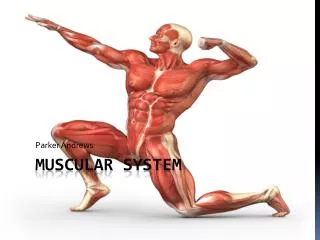
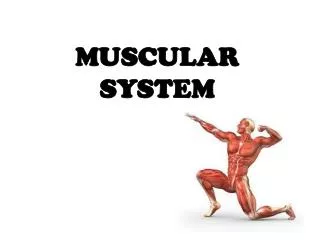
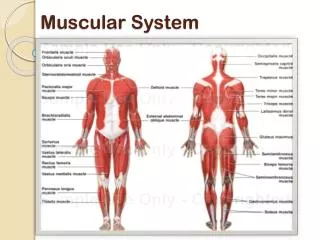
Facts about Muscular system • There are nearly 650 skeletal muscles in the human body! • Skeletal muscles are attached to the skeleton • They work in pairs: one muscle moves the bone in one direction and the other moves it back again • Muscle contractions can be short, single contractions or longer ones. • Smooth muscle can stretch and maintain tension over extended periods
References • www.wikipedia.com • www.google.com • www.innerbody.com