The Essential Role of Vitamin C: Evolution, Deficiency, and Health Implications
Vitamin C is a vital nutrient that acts as a cofactor in enzymatic reactions and collagen synthesis. It defends the body against oxidative stress and free radicals, helping to prevent long-term ailments like heart failure and neurodegenerative disorders. Despite its importance, humans cannot produce Vitamin C due to a genetic mutation affecting L-gulono-y-lactone oxidase, a critical enzyme. This loss, inherited from our frugivorous ancestors, poses challenges in modern diets, as dietary sources are essential for health and survival in non-tropical environments.

The Essential Role of Vitamin C: Evolution, Deficiency, and Health Implications
E N D
Presentation Transcript
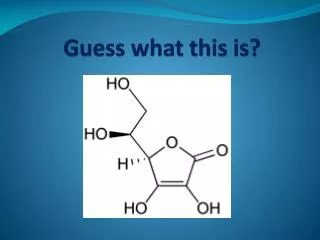
Vitamin- C • an essential nutrient • It also is a cofactor in enzymatic reaction and several other collagen synthesis. • protects our body from antioxidants and oxidative stress.
Oxidative stress • long term effects : sickle cell , parkinson’s , heart failure, bipolar disorder, schizophrenia • Short term effects : prevents aging
Do we make Vitamin- C ? “Enzymologicalstudies in the late 1950s revealed that the genetic defect was caused by the deficiency of L-gulono-y-lactoneoxidase GLO, the enzyme that catalyzes the terminal step of L-ascorbic acid biosynthesisin most animals.” However, recent study show that the human genome contains a nucleotide sequencet hat cross-hybridizes toacDNAfor rat GLO. But a frame-shift mutation has made these genes non-functional
WHY DON'T HUMANS AND OTHER PRIMATES SYNTHESIZE VITAMIN C • 70 - 80 million years ago • Early primates lived in tropical regions and ate lots of fruits (e.g. they were largely frugiverous), and therefore the mutation was not lethal to these animals and was passed on to all descendents. • So just like they say “ what you don’t use you loose” we too have lost the ability to synthesize Vitamin-C
Problem Now we moved out of tropical environments, developed agriculture, started traveling on ships, planes and eating can goods. The repressed ability to synthesize Vitamin-C is in high demand. However, now the question is will it reselect this trait.