Understanding Cell Organelles: Functions and Importance in Cell Biology
This article explores key cell organelles, including mitochondria, ribosomes, endoplasmic reticulum, Golgi apparatus, lysosomes, chloroplasts, and the cytoskeleton. Mitochondria, known as the "powerhouse of the cell," transfer energy to ATP, while ribosomes are vital for protein synthesis. The rough ER synthesizes proteins for export, and the Golgi apparatus processes them for distribution. Lysosomes digest molecules and old organelles, and chloroplasts enable photosynthesis in plants. Additional structures like cilia and flagella aid cell movement, showcasing the complexity of cellular functions.

Understanding Cell Organelles: Functions and Importance in Cell Biology
E N D
Presentation Transcript
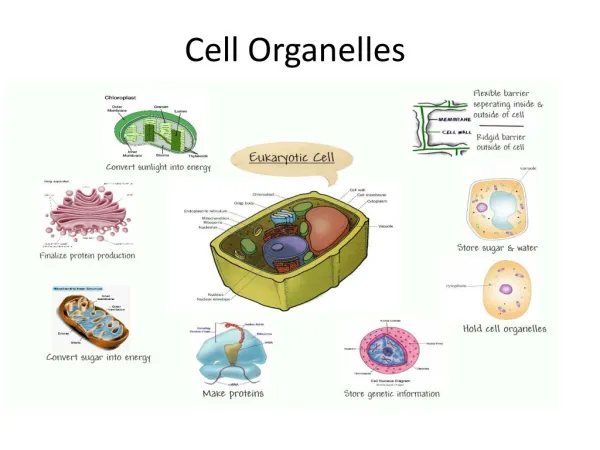
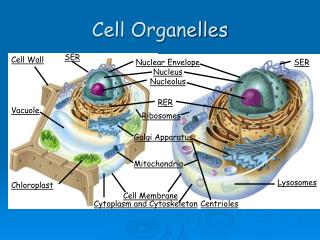
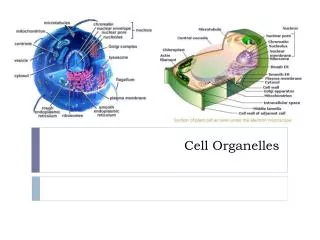
Mitochondria • Transfers energy to ATP which powers most of the cell’s reactions • “Powerhouse” of the cell
Ribosomes • The site where proteins are made • Found of the rough E.R.
Endoplasmic Reticulum • Prepares proteins for export and synthesizes steroids
Rough ER makes proteins in ribosomes, they leave in vesicles and go to the Golgi apparatus
The Cytoskeleton • The system of microscopic protein fibers that supports the shape of a cell • Function in cell structure and movement
Golgi Apparatus • Processes and packages substances produced by the cell
Lysosome • A vesicle that digests molecules & old organelles
Chloroplast • Enables plants to make carbs from carbon dioxide and water
Cilia and Flagella • Hairlike structures that enable cell movement or move substances across a cell’s surface
Examples: • Respiratory tract • Bacteria cell Cilia Flagella
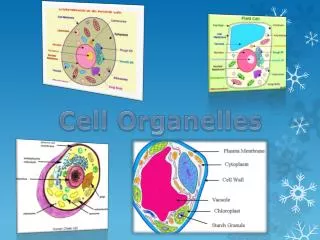
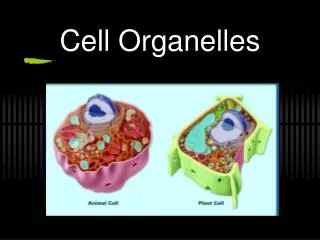
Features unique to plant cells • Cell walls • Plastids • Central vacuoles
Central Vacuole • When filled with water; keeps plant cells rigid Also stores waste, enzymes, pigments, toxins etc.
Plastids-contain their own DNA • Include chloroplasts, chromoplasts, and leucoplasts