
SlideServe
Menu
Préférences
© SlideServe · v2026

Sponges

kemal avatar
9 diapositives · 317 Views · Jul 25, 2014

Sponges. Sponges, phylum Porifera , are invertebrates made up of two cell layers. Most sponges are asymmetrical. They have no tissues, organs, or organ systems. Most adult sponges do not move from place to place. Cnidarians.
Sponges - slide 1
01 / 9Sponges
1 / 17

Télécharger la présentation

Sponges
Une image / un lien ci-dessous est fourni (tel quel) pour télécharger la présentation

Politique de téléchargement : le contenu du site vous est fourni TEL QUEL pour votre information et votre usage personnel ; il ne peut être vendu, concédé sous licence ni partagé sur d’autres sites sans l’accord de son auteur.Le contenu vous est fourni TEL QUEL, pour votre information et votre usage personnel uniquement. Téléchargez la présentation en cliquant sur ce lien. Lors du téléchargement, si vous ne parvenez pas à télécharger une présentation, l’éditeur a peut-être supprimé le fichier de son serveur.Pendant le téléchargement, si vous ne parvenez pas à obtenir une présentation, le fichier a peut-être été supprimé par l’éditeur.

F I N

Plus de contenu associé

Transcription de la présentation

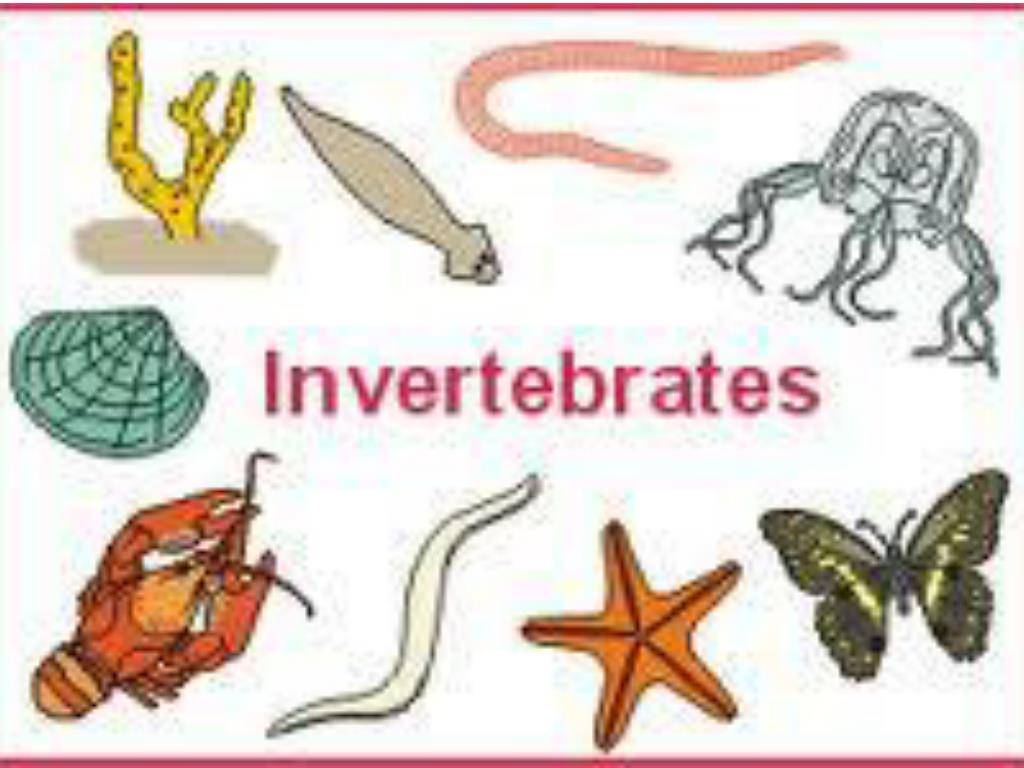
  1. Sponges • Sponges, phylum Porifera, are invertebrates made up of two cell layers. • Most sponges are asymmetrical. • They have no tissues, organs, or organ systems. • Most adult sponges do not move from place to place

  2. Cnidarians Like sponges, cnidarians are made up of two cell layers and have only one body opening. The cell layers of a cnidarian, however, are organized into tissues with different functions. Cnidarians are named for sting cells that contain nematocysts that are used to capture food. Jellyfishes, corals, sea anemones, and hydras belong to the phylum Cnidaria.

  3. Roundworms • Roundworms, phylum Nematoda, have a pseudocoelom and a tube-like digestive system with two body openings. • Most roundworms are free living, but many plants and animals are affected by parasitic roundworms.

  4. Flatworms Flatworms, phylum Platyhelminthes, include free-living planarians, parasitic tapeworms, and parasitic flukes. • Flatworms are bilaterally symmetrical animals with flattened solid bodies and no body cavities. • Flatworms have one body opening through which food enters and wastes leave.

  5. Mollusks Slugs, snails, clams, squids, and octopuses are members of phylum Mollusca. All mollusks are bilaterally symmetrical and have a coelom, two body openings, a muscular foot for movement, and a mantle, which is a thin membrane that surrounds the internal organs. In shelled mollusks, the mantle secretes the shell.

  6. Segmented Worms • Bristle worms, earthworms, and leeches are members of phylum Annelida, the segmentedworms. • Segmented worms are bilaterally symmetrical, coelomate animals that have segmented, cylindrical bodies with two body openings. • Most annelids have setae, bristlelike hairs that extend from body segments, that help the worms move. • Segmentation is an adaptation that provides these animals with great flexibility. • Each segment has its own muscles. Groups of segments have different functions, such as digestion or reproduction.

  7. Arthropods • Arthropods are bilaterally symmetrical. • Coelomate invertebrates with tough outer coverings. • Called exoskeletons and jointed appendages that are used for walking, sensing, feeding, and mating. • Exoskeletons protect and support their soft internal tissues and organs. • Jointed appendages allow for powerful and efficient movements.

  8. Echinoderms • Echinoderms, phylum Echinodermata, are radially symmetrical, coelomate animals with hard, bumpy, spiny endoskeletons covered by a thin epidermis. • The endoskeleton is comprised of calcium carbonate. • Echinoderms move using a unique water vascular system with tiny, suction-cuplike tube feet. • Some echinoderms have long spines also used in locomotion.