SlideServe
Menu
Préférences
© SlideServe · v2026

Sponges

lionel avatar
15 diapositives · 453 Views · Jul 19, 2014

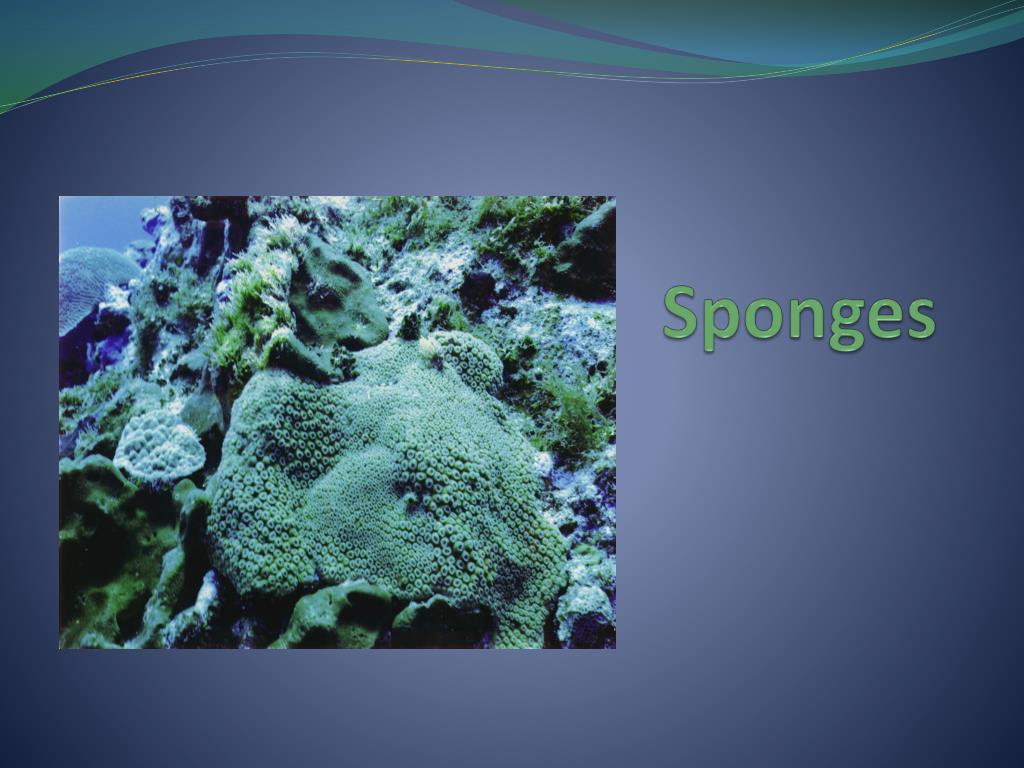
Sponges. Sponges. Sponges are classified as animals because they are multicellular heterotrophs with no cell walls. They also have a few specialized cells Grow in irregular shapes and live typically on the ocean floors Filled with small holes called pores. Sponges.
Sponges - slide 1
01 / 15Sponges
1 / 17

Télécharger la présentation

Sponges
Une image / un lien ci-dessous est fourni (tel quel) pour télécharger la présentation

Politique de téléchargement : le contenu du site vous est fourni TEL QUEL pour votre information et votre usage personnel ; il ne peut être vendu, concédé sous licence ni partagé sur d’autres sites sans l’accord de son auteur.Le contenu vous est fourni TEL QUEL, pour votre information et votre usage personnel uniquement. Téléchargez la présentation en cliquant sur ce lien. Lors du téléchargement, si vous ne parvenez pas à télécharger une présentation, l’éditeur a peut-être supprimé le fichier de son serveur.Pendant le téléchargement, si vous ne parvenez pas à obtenir une présentation, le fichier a peut-être été supprimé par l’éditeur.

F I N

Plus de contenu associé

Transcription de la présentation
  1. Sponges

  2. Sponges • Sponges are classified as animals because they are multicellular heterotrophs with no cell walls. They also have a few specialized cells • Grow in irregular shapes and live typically on the ocean floors • Filled with small holes called pores

  3. Sponges • The movement of water through a sponge allows for: • 1. Feeding • 2. Respiration • 3. Circulation • 4. Excretion • Flagella are used to move water through pores in the walls of sponges to filter food from the water and to remove waste

  4. Sponges • As water moves through their bodies oxygen that is dissolved in the water is absorbed by sponge cells • At the same time Carbon Dioxide is removed as well as other wastes such as ammonia • Responses • Although they are simplistic, sponges do produce toxins that make them poisonous to potential predators

  5. Sponge Reproduction • Sponges reproduce both sexually and asexually • Practice internal fertilization • This is when eggs are fertilized inside a body • Sperm are released in the ocean and currents carry them to neighboring sponges where they enter pores and fertilize eggs • Motile larva develop and are carried by the ocean currents until they settle on the sea floor

  6. Importance of sponges • They provide habitats for marine animals such as snails, fish, sea stars, and shrimp • Play an important role in the primary growth of coral

  7. Cnidarians

  8. Cnidarians • Are soft-bodied, carnivorous animals that have stinging tentacles arranged in circles around their mouths • They are the simplest of all animals to have body symmetry and specialized tissues

  9. Get their name from cnidocytes • Stinging cells that are located in their tentacles • Inside each cnidocyte is a nematocyst • Which is a poisen-filled stinging structure that contains a tightly coiled dart

  10. Cnidarian Body Plan • All are radially symmetric • Have two different looking life stages • 1. Polyp • Is a cylindrical body with armlike tentacles, mouth points upward • 2. Medusa • Bell shaped body with mouth on the bottom

  11. Feeding Paralyze prey and pull it upward into mouth where the prey is digested extracellular, once broken down food is absorbed into the cells

  12. Respiration, Circulation, Excretion • All occurs by diffusion Movement Some are stationary, but the mobile ones move by jet propulsion Water is pushed out of the body in 1 direction and the moves the animal in the opposite direction

  13. Reproduction • Most reproduce both sexually and asexually • Sexual reproduction takes place via external fertilization • Females release eggs and males release sperm into the water • Typically a larva is free swimming and then attaches to the ocean floor and becomes a polyp and then it buds and releases the medusa

  14. Cnidarian Groups • Include jellyfishes, hydras and sea anemones and corals