Functions and Components of Blood: The Essential Liquid Tissue
Blood is a vital liquid tissue in the body with two primary functions: transporting essential substances and defending against infections. Its transport duties include carrying oxygen, carbon dioxide, nutrients (like glucose and amino acids), ions, wastes, hormones, and even heat. The blood comprises two main components: plasma, the liquid portion that carries most substances, and cellular elements such as red blood cells (RBCs), white blood cells (WBCs), and platelets. Each plays a critical role in bodily functions, from oxygen transport to immune defense and clotting.

Functions and Components of Blood: The Essential Liquid Tissue
E N D
Presentation Transcript
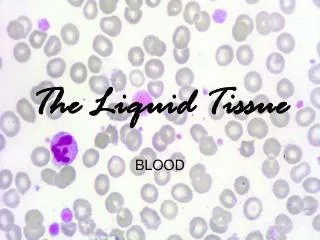
The Liquid Tissue BLOOD
Blood Blood performs two major functions: • Transport through the body of • oxygen and carbon dioxide • food molecules (glucose, lipids, amino acids) • ions (e.g., Na+, Ca2+, HCO3−) • wastes (e.g., urea) • hormones • heat • Defense of the body against infections and other foreign materials. All the WBCs participate in these defenses
Components of Blood Liquid portion: Plasma • mostly water • carries just about everything (except O2/CO2)
Cellular portion: Red Blood Cells • Most numerous cellular portion of blood • Have no nuclei; not “true” cells • contain hemoglobinprotein that carries O2 • Look a little like Cheerios
Cellular portion: White blood cells • Fight infections– Eat foreign, dead/dying, abnormal cells • Have nuclei • Several different types • Macrophages • Neutrophils
Cellular portion: Platelets • Cell fragments • Help with clotting (making “scabs”)
How many parts can you identify in this blood smear? RBC? WBC? Platelets? Plasma? Did you get ‘em all?