Essential Nutrients for Optimal Brain Function and Development
The human brain, weighing approximately 1.4 kg and consuming about 20% of our resting energy, relies on a variety of nutrients for optimal function. Critical for cognitive health are glucose for energy, amino acids for protein synthesis, B vitamins as antioxidants, omega-3 fatty acids, and essential minerals. Small dietary changes can significantly impact brain health, especially during development. While nutrition influences cognitive function and behaviors related to food intake, obesity and cognitive impairment can be interrelated. Understanding these dynamics is vital for fostering healthy lifestyles and brain function.

Essential Nutrients for Optimal Brain Function and Development
E N D
Presentation Transcript
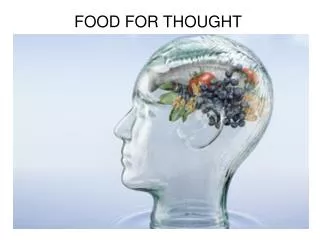
What food does the brain need? Our brains weigh ~ 1.4 kg = 2% of body weight The brain requires 20% of resting metabolic consumption (1600 calories/day = 320cals) ~16 watts supercomputer 1000 watts Energy comes from glucose & when a particular brain region is active, blood vessels dilate to deliver more glucose & oxygen.
What else does the brain need? Amino acids to make new proteins and neurotransmitters Vitamins to carry out essential processes, especially B vitamins, and to act as antioxidants (E & C) Fatty acids, especially omega-3 oils found in fish Minerals A well nourished person with a balanced diet will have an abundance of these nutrients.
Very small changes in nutrients available to the brain can make a big difference… Especially to the developing brain
Untreated PKU results in intellectual disability and often seizures. Phenylketonuria
These sorts of effects of nutrition on the brain are fortunately rare. For most people, the food we need for healthy brains is available… Especially the calories!
For most people, it’s not so simple… We like food We WANT food AND
And we are prepared to work hard to get them “Do your homework and you can have a sweet!”
Possible reasons for overeating Disruption of reward circuitry More powerfully motivated to acquire food Maladaption to food environment Food as an addictive substance, especially sweet foods Obesity leading to impairment of executive function
Cognitive impairment and obesity are co-related and causality is complex Low scores of executive function at age 4 predict elevated BMI at age 8
Figure 1. Radar chart illustrating the performance of the Anorexia nervosa, Obese and Healthy eating/weight control groups for interference control, cognitive rigidity and decision making. Fagundo AB, de la Torre R, Jiménez-Murcia S, Agüera Z, et al. (2012) Executive Functions Profile in Extreme Eating/Weight Conditions: From Anorexia Nervosa to Obesity. PLoS ONE 7(8): e43382. doi:10.1371/journal.pone.0043382 http://www.plosone.org/article/info:doi/10.1371/journal.pone.0043382
There are no simple solutions • Must always consider other factors • Lifestyle: eg exercise • Intrinsic: eg genetics
Artist’s Response Please, no brains full of food! Powerful communication without oversimplifying. Possible consideration of biological evolution vs technical development. Enjoy Imagining the Brain!