LIPIDS
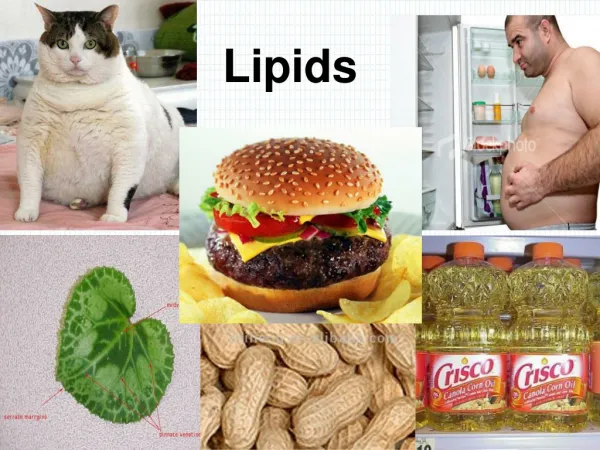
LIPIDS. Lipids. Triglycerides fats and oils Phospholipids Sterol derivatives. Storage. Adipose tissue Fat storing Can expand indefinitely by number by size. Lipids. Lipids. Provides energy stored fat supplies 60% of energy during rest prolonged exercise starvation. Lipids.

LIPIDS
E N D
Presentation Transcript
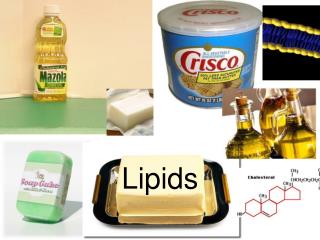
Lipids • Triglycerides • fats and oils • Phospholipids • Sterol derivatives
Storage • Adipose tissue Fat storing Can expand indefinitely by number by size Lipids
Lipids • Provides energy • stored fat supplies 60% of energy during rest • prolonged exercise • starvation
Lipids • Provide insulation • vital organ protection • nerve impulse transmission • Cell structure • Enhance fat soluble vitamin absorption
Lipids • Facilitate weight gain • Found in plants and animals • Visible and invisible (hidden) fats • Body synthesizes all fatty acids except two • 9 kcal/g
Lipids • Supply taste and flavor to foods • Post-prandial satiety • Can stay 3 - 4 hours in stomach
Lipids • Precursor for synthesis of steroid hormones • prostalandins and actylcholine
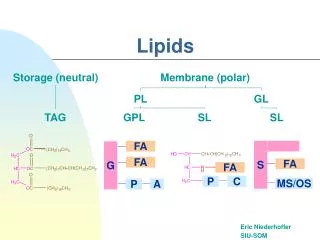
Triglycerides • Fats and oils • 95% of total fat intake • 3 fatty acids attached to 3 carbon based glycerol • Glycerol is an alcohol • Straight chains • C2 to C20+
Fatty Acids • Differ in two ways • Chain length • short- not usually in foods • medium- milk fat, non-dairy creamers • long- meat fats, olive oil, peanut oil • very long- fish oils, some plant oils
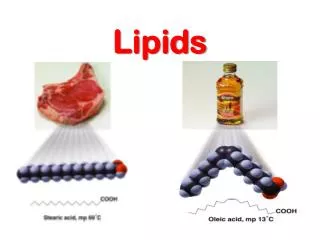
Fatty Acids • Degree of saturation • Partially determines health impact • Chemical structure • saturated-all single bonds • monounsaturated-one double bond • polyunsaturated-two or more double bonds
Linoleic Plant oils Omega 6 Rare deficiency Hormone-like Part of clotting process and immune response Linolenic Fish oils Omega 3 Rare deficiency Hormone-like Part of clotting process and immune response Essential Fatty Acids
In the news Research on preventing heart disease Fish oil supplements? Eat the fish! Too much fish oil acts a blood thinner. Dark meat fish or cold water fish. Bass, cod, salmon Linolenic -Omega 3
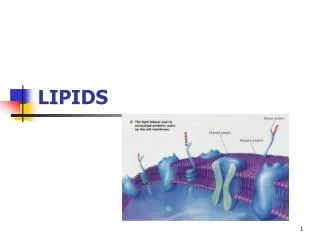
Phospholipids • Glycerol with 2 fatty acids plus choline or similar compound • Lecithin • Supplement not needed • Enough made in liver • Emulsifiers • Major part of cell membrane
Phospholipid formed 2 fatty acids & 1 choline
Sterols • Cholesterol • Vitamin D • Sex hormones • Adrenocortical hormones
Plant sterols • Poorly absorbed • Compete with CHOL absorption • Can decrease CHOL absorption up to 50% • Subject of research & TV ads • Phytoestrogens-hot topic in women’s health
Sterols • Cholesterol • made in liver, not essential • part of cell membranes • precursor of bile acids • helps vitamin D be formed • part of hormones
Cholesterol • Bile is made from cholesterol • stored in gall bladder • prepares fat for digestion • after fat digestion,some is excreted and some is reabsorbed • CHOL in reabsorbed bile is reused • Medications and dietary fiber is used to bind bile-reduces total CHOL
Cholesterol • Some travels in bloodstream as part of lipoproteins • Can become trapped in arteries and contribute to heart disease • High CHOL and high fat diet increased risk of LDL elevation
Dietary Fat • Excessive intakes • =obesity • =diabetes mellitus • =cancer • =heart disease
Obesity • Imbalance • Too many kcal in • Not enough energy expenditure • Percentage of fat in diet varies • Do not restrict fat until age 2 • Gradually change diet to match dietary guidelines during childhood
Cancer • Fat may promote, but does not cause cancer • High fat diets linked to increased risk for • Colon and rectum • Prostate • Endometrium • More research needed
Cardiovascular Disease • Leading cause of death • Plaque development causes increased incidence of blood clots • Strongest diet connection • Too much saturated fat in the diet • Polyunsaturated fats have both +/- effects • Monounsaturated fats more beneficial
Saturated Fat • Associated with serum CHOL elevation • Main dietary determinant of blood CHOL levels • Omega 3 fatty acids reduce CHOL most • delay cancer development?
Polyunsaturated Fat • Associated with total serum CHOL reduction • Reduction LDL-C • Shorter chained, unsaturated fats are softer and melt more easily. • Lard is hard.
Monounsaturated Fat • Associated with serum TG reduction • Maintenance of HDL-C • Serum CHOL neutral
Fat substitutes • Instead of, not in addition • Long term health effects not known • Simplesse • Olestra • Oatrim
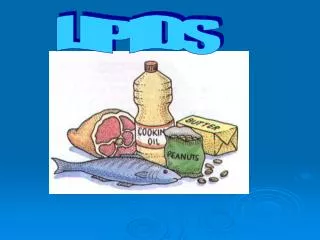
Sources • Meats, nuts, seeds, olives, avocados • Ice cream • Bakery products • Salad dressing • Milk • Fried foods
Hydrogenated Fats • Unsaturated vegetable oils • Hydrogen bonds have been added • More stable products • More solid products
Trans and CIS fatty acids • CIS fatty acid-naturally occurring bond H2 on same side of chain • Trans fatty acid-commercially made bond H2 on opposite sides • makes more solid texture • research says too much will raise serum lipid levels • limit to 5-10% of fat
Kcal and Grams • Kcal from fat confusing for many persons • Count fat grams • 20-30% of kcal from fat usually appropriate • X number of kcal by percent of kcal from fat wanted • Divide by 9
Dietary guidelines • Total fat <30% • Saturated fat <10% • Polyunsaturated <10% • Monounsaturated <10% • CHOL <300 mg • New TLC diet: 200 mg CHOL, up to 35% fat if mostly monounsaturated