DIGESTION
The digestive system comprises various organs and tissues that transform food into absorbable nutrients through mechanical and chemical processes. Key components include the mouth, esophagus, stomach, small intestine, and large intestine, facilitating the transformation of food into a semi-liquid form (chyme) and allowing nutrient absorption. Essential processes such as peristalsis, the role of enzymes, and various organs' functions like the uvula and epiglottis are crucial. This overview elucidates how food is mechanically broken down into smaller pieces and chemically altered for nutrient uptake.

DIGESTION
E N D
Presentation Transcript
Definitions • Digestive system: a group of organs and tissues in the body that transform complex molecules to simple ones so nutrients can be absorbed • Organ: a structure composed of several tissues working together to perform a function • Gland: an organ or group of cells which secretes enzymes or hormones • Enzyme: chemical that causes changes in the body
Definitions continued • Peristalsis: muscle contractions that push food through a tube • Bolus: chewed food • Chyme: nutrients in semi-liquid form • Uvula: component that stops food from entering nasal cavity • Epiglottis: component that stops food from entering the trachea • Absorption: nutrients pass from intestines to blood by diffusion
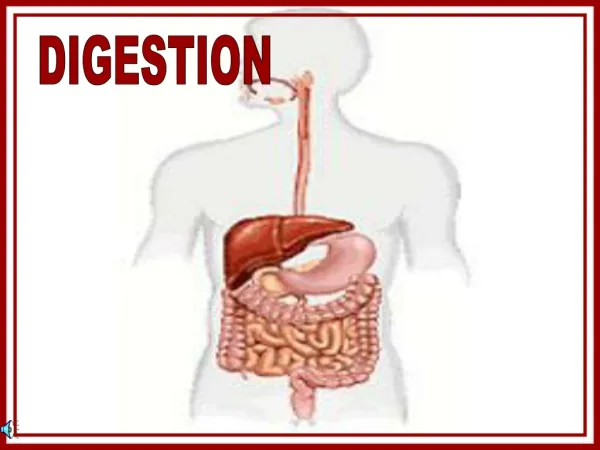
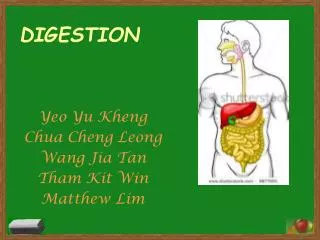
Passage way • Mouth • Pharynx • Esophagus • Stomach • Small intestine • Large intestine • Rectum • Anus
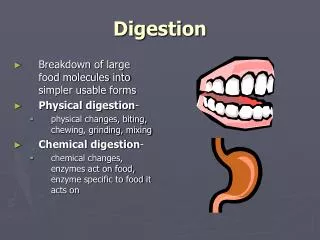
Physical/Mechanical Breakdown • Food DOES NOT change its molecular makeup, just its shape and size, looks different • Mouth- chewing and swallowing • Esophagus- peristalsis • Stomach- churning, grinding and peristalsis • Small intestine- peristalsis and churning • Large intestine- peristalsis and churning
Chemical Breakdown • Food changes its molecular makeup, looks and is different • See handout
Absorption • Through folds called villi by diffusion • Small intestine – amino acids, glucose, glycerol and fatty acids • Large intestine – vitamins, minerals and water