Download
1 / 13
130 likes | 253 Vues
This exploration traces Native Americans' journey into the media and film industry, revealing key milestones like the formation of the American Indian Film Institute in 1979 and Native American Television in 1990. It highlights the significance of the Telecommunications Act in reducing discrimination and increasing U.S. interest in Native stories. The initiative aimed to foster collaboration and creativity, emphasizing the importance of sharing authentic narratives. Prominent figures, such as Jay Silverheels and Chris Eyre, paved the way for a new representation of Indigenous culture and storytelling in the entertainment landscape.

E N D
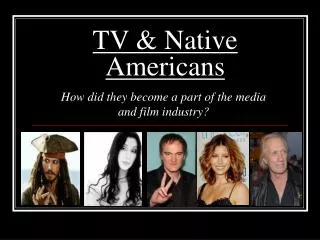
TV & Native Americans How did they become a part of the media and film industry?
What led them to appear in media? • US interest grows? • Less discrimination? • Telecommunications Act?
Coming soon… • Indians in media • ‘Indian Hollywood’
Indians in media • Native Public Telecommunications (NAPT) • When? 1976 • Why? To share native stories with the world • Strategy? Sharing, collaboration, creativity, honoring
Indians in media • Native American Television(NATV) • Where? Williamsburg, Virginia • When? 1990
Indians in media • Native News Today • Weekly TV show • Gerald Wofford, Jason Salsman
Indians in media • Native Public Media (NPM) • 2004 • Purposes? Native media at the community New communications platforms New frequencies Telecommunication Act
‘Indian Hollywood’ • The Beginning • John Ford western films (N. A. as sidemen) • The No1s - First Native American actor: Jay Silverheels - First well-known director: Chris Eyre - First Native American women film: Naturally Native (1998)
‘Indian Hollywood’ • American Indian Film Institute (AIFI) • 1979 • Non-profit media arts center • Understanding of the culture, traditions
‘Indian Hollywood’ • The Cults • Dances with wolves • Geronimo • The last of the Mohicans • Pocahontas
How did they become a part of the media and film industry? Cultural inquiry? There were no other possibilities? Wanted to fit in? BOTH
THE END Thank you for your attention