Understanding Igneous Rocks: Formation, Types, and Characteristics
70 likes | 200 Vues
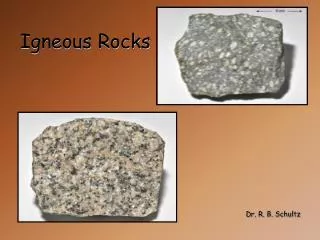
Igneous rocks are formed from magma, molten rock that rises from deep within the Earth due to intense heat and pressure. They are classified into two major types: intrusive and extrusive. Intrusive igneous rocks form below the ground and cool slowly, resulting in large mineral grains visible to the naked eye. In contrast, extrusive igneous rocks form above ground when magma erupts as lava and cools quickly, resulting in small, fine-grained minerals. Common examples include basalt, pumice, obsidian, and granite.


Understanding Igneous Rocks: Formation, Types, and Characteristics
E N D
Presentation Transcript
Magma • You cannot have igneous rocks without the production of Magma Magma is really just molten rock (either sedimentary or metamorphic) because of the intense heat and pressure within the Earth Magma is less dense than the surrounding rock so it is pushed upward and can be released from a volcano Underground-magma Above ground- lava
Intrusive igneous rocks • Formed below ground • Only reach the surface when erosion moves the soil from the underground rock or uplifting has occurred • Requires a long time for the magma to cool so mineral grains are large and can be viewed with the unaided eye
Extrusive igneous rocks • Formed above ground • Magma cools rapidly • Mineral grains are small and fine grained
Basalt Pumice Obsidian Extrusive Igneous Rocks