Advancements in Life Sciences: Hypothesis Generation and Testing in Microbiology and Biochemistry
This comprehensive overview focuses on the critical role of hypothesis generation and testing in various fields of life sciences. It emphasizes the significance of sequence data, proteins, enzymes, regulatory networks, and pathways. By exploring aspects of virology, anatomy, genetics, and cell biology, the paper illustrates how new knowledge can be generated through systematic experimentation by students, professors, and research scientists. It highlights the interdisciplinary nature of biology and the collaborative efforts necessary for advancing scientific understanding and innovation.

Advancements in Life Sciences: Hypothesis Generation and Testing in Microbiology and Biochemistry
E N D
Presentation Transcript
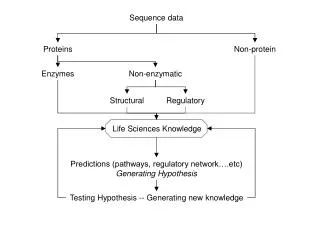
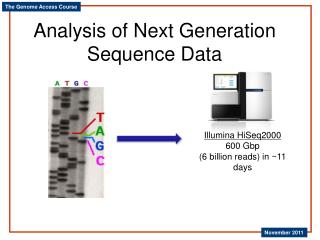
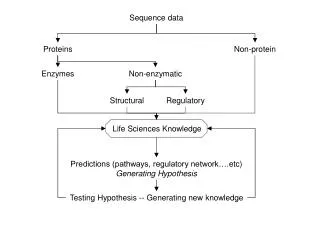
Life Sciences Knowledge Sequence data Proteins Non-protein Enzymes Non-enzymatic Structural Regulatory Predictions (pathways, regulatory network….etc) Generating Hypothesis Testing Hypothesis -- Generating new knowledge
Life Sciences Knowledge Sequence data Proteins Non-protein Enzymes Non-enzymatic Structural Regulatory Virology Anatomy Biochemistry Anthropology Genetics Botany Biotechnology Cell Biology Ecology Molecular Biology Microbiology Medicine Physiology Zoology Predictions (pathways, regulatory network….etc) Generating Hypothesis Testing Hypothesis -- Generating new knowledge
Life Sciences Knowledge Cell Biology Virology Ecology Anatomy Molecular Biology Biochemistry Anthropology Microbiology Predictions (Functional, pathways, regulatory network) Generating Hypothesis Genetics Neuroscience Physiology Botany Biotechnology Zoology Testing Hypothesis -- Generating new knowledge
Dynamics of systems biology’s family Student / Professor Generating Hypothesis Student / Professor / Postdocs and research scientists Experimental approach Student / Professor(s) / Postdocs and research scientists / Technicians
Student / Professor(s) / Postdocs and research scientists / Technicians Student / Professor / Postdocs and research scientists Student / Professor