The Sun: Source of Energy and Life on Earth
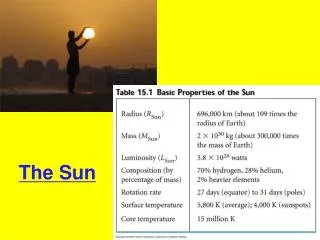
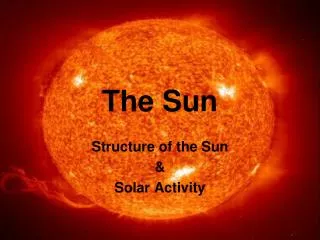
Dive into the fascinating world of the Sun, the powerhouse of our solar system, made up of hydrogen (72%) and helium (26%). Explore how nuclear fusion transforms hydrogen into helium, releasing immense energy in the process—turning stars into giant reactors. Discover the importance of energy flow in ecosystems, the role of chloroplasts in plant life, and the biochemical processes of cellular respiration. Join us as we observe and experiment in a bottle to understand how energy impacts life, from fermentation with yeast to the production of ATP.

The Sun: Source of Energy and Life on Earth
E N D
Presentation Transcript
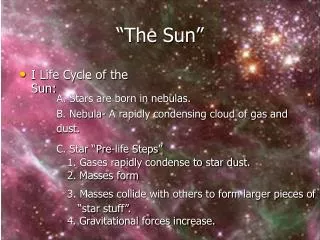
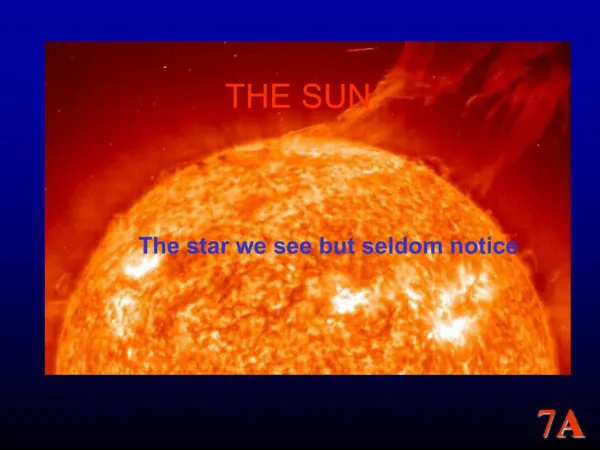
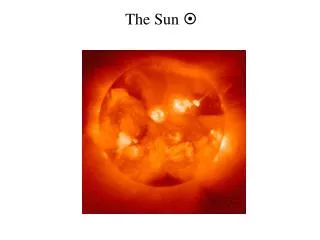
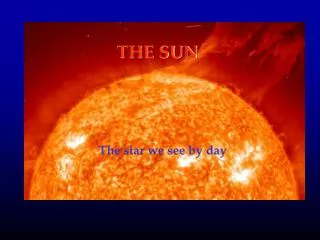
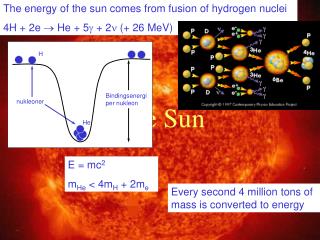
Source of all Energy / Lifestart @14:50 19:50 • the SUN is made up of hydrogen (72%) and helium (26%) • Temperatures and Pressure at the center of the SUN are high enough that the hydrogen atoms combine together • Hydrogen nuclei are forced together until they fuse to form a new element & energy from the nucleus is released
Stars are GIANT nuclear reactorsE = mc2 • Small stars only H He in core • Med stars (our sun): when H gets depleted He O2 & C • Big stars: O2 & C Ne, Na, Mg, S, Si Ca, Fe, Ni, Cr, Cu and others after supernova spew heavy metals into space
Energystart @ 19:50 25:00 from atoms in the Sun give life on Earth
we will make & observe own WORLD inside a bottle (or 2…) to study energy, energy flow and other factoring effecting life in an ecosystem
Cellular Respiration Video 1
Glycolysis glucose 2 pyruvate 6carbons 3 carbons produces 2ATP electrons go to ETC via NADH
Citric Acid or Krebs Cycle produces 2ATP electrons go to ETC via NADH
ETC electrons are caught by oxygen to make H2O produces 32ATP flow of H+ fuels ATP synthase
Fermentation living food: yeast, bacteria, mold, fungi muscle soreness and cramps