
Cloud Formation: Types and Characteristics

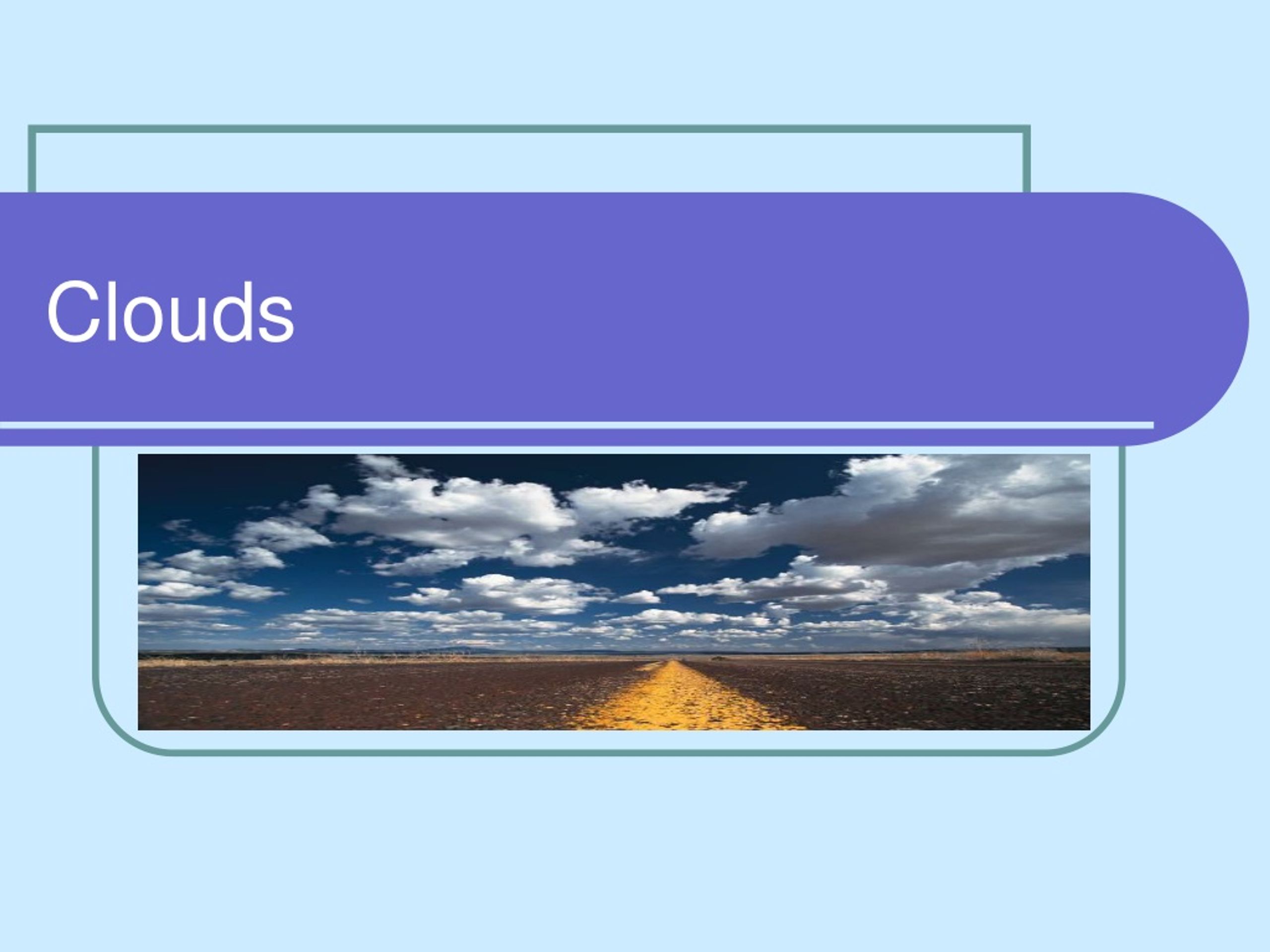
Clouds form as water vapor in the air turns into liquid water or ice crystals when air cools. Particles like salt crystals, dust, and smoke provide surfaces for condensation. Three main cloud types are cumulus, stratus, and cirrus, each with distinct characteristics. Cumulus clouds indicate fair weather, stratus clouds form in layers and may bring precipitation, while cirrus clouds appear as wispy, icy formations at high altitudes. Clouds that develop at ground level are known as fog.
Télécharger la présentation 
Politique de téléchargement : le contenu du site vous est fourni TEL QUEL pour votre information et votre usage personnel ; il ne peut être vendu, concédé sous licence ni partagé sur d’autres sites sans l’accord de son auteur.Le contenu vous est fourni TEL QUEL, pour votre information et votre usage personnel uniquement. Téléchargez la présentation en cliquant sur ce lien. Lors du téléchargement, si vous ne parvenez pas à télécharger une présentation, l’éditeur a peut-être supprimé le fichier de son serveur.Pendant le téléchargement, si vous ne parvenez pas à obtenir une présentation, le fichier a peut-être été supprimé par l’éditeur.
F I N