Download
1 / 8
80 likes | 206 Vues
The Capad is a small, carnivorous mouse, measuring only 25 cm in length and 20 cm in height. It has adapted to survive in harsh environments by developing strong kidneys that can retain water for weeks and by living in small cracks and tunnels that offer warmth and protection from predators. This elusive creature primarily feeds on small rodents and scorpions, leveraging its camouflage to evade dangers. However, it must be cautious of spiders and other threats that also inhabit its cave-like homes. Discover the remarkable life strategies of the Capad mouse.

E N D
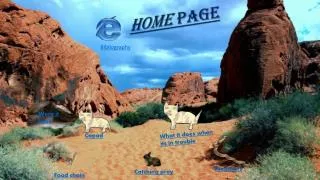
Home page What it does when its in trouble Bibliography Capad Were it lives Predators Food chain Catching prey
Capad. back Size The Capad is very small it is only 25cm long and 20cm tall. This is important because it doesn't have to eat much food. kidneys The Capad also has adapted strong kidneys to hold water for weeks.
back The Capad lives' in small cracks and tunnels. They live In these spaces to stay warm and safe. It is also good because larger animals cant get to them. The capad also stay’s in these crakes to stay cool because there is limited water and shad outside. There is a down side though. You can find out about it on predators. Were it lives
back Food chian The Capad is a carnivore. it eats small rodents and can eat scorpions because it has adapted to its venom.
back Predators Caves The down side to living in a cave is that. spiders go in there witch is one of the Capads predators. The Capad’s colour helps it to camouflage to hide from predators When the Capad gets startled it runs off to hide. Scorpions are the Capads food but if it is not careful it can be a predator be its pointy claw piecing it.
back The Capad rises his tail when it see’s a predator to warn other Capad’s. It has adapted this in time. In a emergence
back The Capad takes short cuts and small holes to have a better chance of catching its prey. Catching pray
back Thank you for reading Bibliography http://en.wikipedia.org/wiki/Hopping_mouse. Date:26/03/14 Mousehttp://www.alicespringsdesertpark.com.au/kids/nature/mammals/mouse.shtml date:26/03/14 http://animals.nationalgeographic.com/animals/mammals/coyote/ Date:26/03/14 http://www.thefreedictionary.com/viscachas. Date:26/03/14 By: Dayna