
SlideServe
Menu
Préférences
© SlideServe · v2026

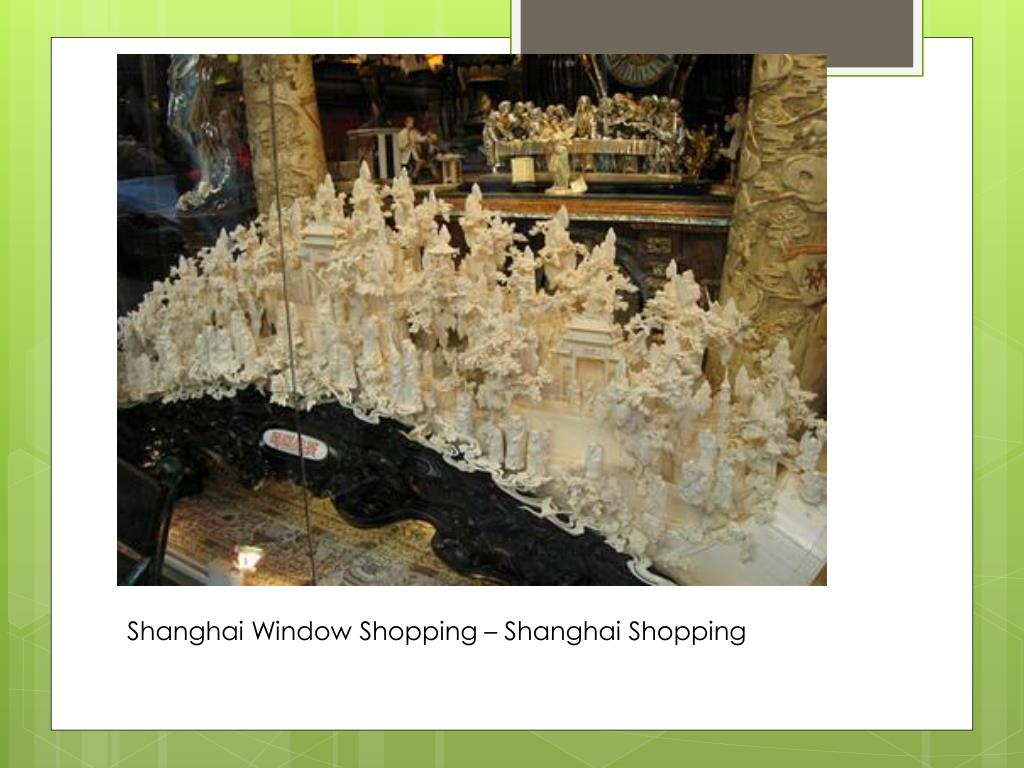
Shanghai Window Shopping – Shanghai Shopping

laddie avatar
18 diapositives · 459 Views · Jul 29, 2014

Shanghai Window Shopping – Shanghai Shopping. The Ivory Wars. Ivory Background . Exists in rhinoceros, narwhals, walrus, pigs, and sperm whales Elephant are the most important source A tusk is a “big incisor tooth” Ivory is used for a variety of purposes. Occupy for Animals - 2013.
Shanghai Window Shopping – Shanghai Shopping - slide 1
01 / 18Shanghai Window Shopping – Shanghai Shopping
1 / 17

Télécharger la présentation

Shanghai Window Shopping – Shanghai Shopping
Une image / un lien ci-dessous est fourni (tel quel) pour télécharger la présentation

Politique de téléchargement : le contenu du site vous est fourni TEL QUEL pour votre information et votre usage personnel ; il ne peut être vendu, concédé sous licence ni partagé sur d’autres sites sans l’accord de son auteur.Le contenu vous est fourni TEL QUEL, pour votre information et votre usage personnel uniquement. Téléchargez la présentation en cliquant sur ce lien. Lors du téléchargement, si vous ne parvenez pas à télécharger une présentation, l’éditeur a peut-être supprimé le fichier de son serveur.Pendant le téléchargement, si vous ne parvenez pas à obtenir une présentation, le fichier a peut-être été supprimé par l’éditeur.

F I N

Plus de contenu associé

Transcription de la présentation
  1. Shanghai Window Shopping – Shanghai Shopping

  2. The Ivory Wars

  3. Ivory Background • Exists in rhinoceros, narwhals, walrus, pigs, and sperm whales • Elephant are the most important source • A tusk is a “big incisor tooth” • Ivory is used for a variety of purposes

  4. Occupy for Animals - 2013

  5. Sa’dabad Palace, Iran, 2013

  6. Ivory Piano Keys

  7. Hankos – Japanese stamps made of ivory – status symbol

  8. Harvesting Ivory = Lucrative!

  9. Commodity Prices – per pound basis • Gold = $ 16 310 • Oil = $ 32 • Corn = $.11 • Diamond = $49 000 approx. • Raw Ivory (2012) = $900

  10. And dangerous!

  11. African Wildlife Trust - 2012

  12. Zakouma National Park : Southeastern Chad, Central Africa

  13. Elephant Facts • Average elephants live up to 60- 80 years old • Tusks weight 60 – 100 lbs at 60 years • Gestation (pregnancy) is 22 months • Live in large herds, the oldest matriarch is the boss • Eat approximately 150 kgsof vegetation every day Source: Dr. Mike Loomis – North Carolina Zoological Park

  14. The Ivory Trade • Majority of ivory is leaving Africa and destined for the East Asia (China, Japan) • In 1979, – 1.3 million elephants in Africa • By 1989, only 600 000 remained • Many blamed it on the increase in Ivory demand • In 1989 CITES (Convention on International Trade in Endangered Species of Flora and Fauna) made the trade of ivoryillegal

  15. Supporters of The Ivory Ban • Eastern African Countries • Kenya, Tanzania, Uganda are dependant upon tourism and safaris generate large amounts of income • 44% of Tanzania’s land base is national parks • Safaris generated over $1.7 billion (2011) for Tanzania • People want to see the big five, buffalo, lion, leopard, rhinoceros and of course elephants

  16. Kenya Ivory Burning - 1989 In protest of the Ivory Trade - the Kenyan government rather burn their ivory, then have it sold illegally.

  17. Opposition to the Ban • Southern African Countries including South Africa, Zimbabwe, Botswana, Namibia and Swaziland • These countries struggle with too many elephants • Suggest culling (harvesting the sick and old) elephants to support community programs.

  18. The Campfire Program Until 1989, Zimbabwe granted locals permission to kill a certain number of elephants. • Revenue from those elephant tusks was used to build schools, wells and health clinics. • Trophy Hunting In Zimbabwe, a family of 8 can subsist on $230/year. A 21-day hunt brings $ 50 000 into the local community