Download
1 / 2
20 likes | 152 Vues
Cell reproduction is a fundamental process by which new cells are generated. In single-celled organisms, one parent cell divides to produce two identical daughter cells, leading to population growth. In multicellular organisms, two parent cells combine genetic material, contributing to organismal growth. The life cycle of a cell includes three essential stages: Interphase, where the cell grows and prepares for division; Mitosis, the phase where the nucleus divides; and Cytokinesis, where the cytoplasm and organelles are split. Understanding these stages is crucial in biology.

E N D
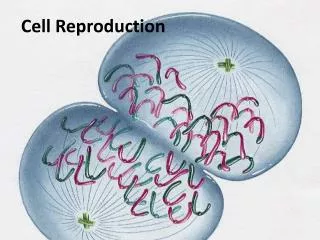
Cell Reproduction • the process by which new cells are formed • Single-celled organisms • one parent cell produces two new identical “daughter cells” • cell division results in population growth B.Multi-cellular organisms - two parent cells produce cells which receive half their genes from each parent - cell division results in growth of organism
Life of a Cell Cell division is a continuous process that involves three stages: • Interphase – growth and preparation • Mitosis – division of the nucleus • Cytokinesis – division of the cytoplasm and organelles