ATP and Metabolism
90 likes | 204 Vues
ATP (Adenosine Triphosphate) plays a central role in metabolism, encompassing the organism's various chemical reactions. Metabolic pathways feature defined steps, starting from specific molecules and leading to particular products, catalyzed by enzymes. Catabolic reactions release free energy by breaking down complex molecules, fueling cellular respiration. In contrast, anabolic reactions consume energy to build larger molecules and include processes like photosynthesis. Energy coupling ensures that endergonic reactions are powered by exergonic ones, making ATP essential for numerous cellular functions.


ATP and Metabolism
E N D
Presentation Transcript
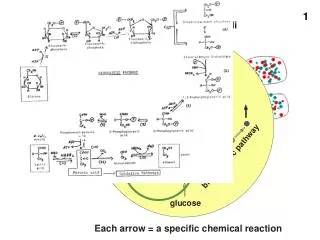
Metabolism • Totality of an organism’s chemical reactions • Pathway of defined steps beginning with a specific molecule resulting in a certain product catalyzed by a specific enzyme
Catabolic Reactions • “downhill” • Release of free energy by breaking down complex molecules • Cellular respiration • Energy that is stored in molecules is available to do work • Exergonic • Releases free energy
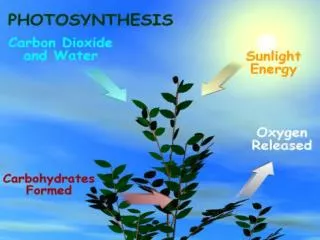
Anabolic • “uphill” • Energy consumed to build complex molecules • Photosynthesis • Synthesis of proteins from amino acids • Endergonic • Absorbs free energy
Energy Coupling • Endergonic reactions drive exergonic reactions • Photosynthesis drives Cellular Respiration
Cell Work • Chemical • Synthesis of polymers from monomers • Transport • Pumping substances against gradient • Mechanical • Muscle contractions
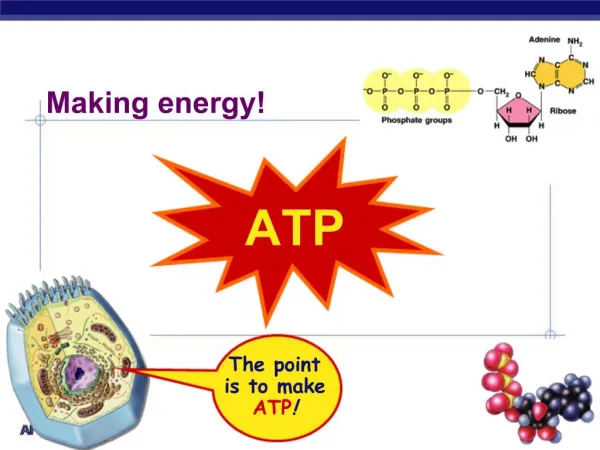
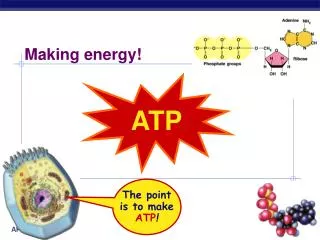
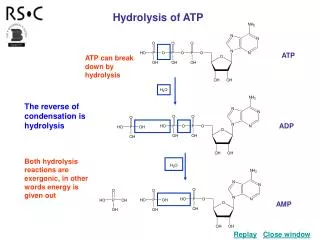
ATP • Adenosine Triphosphate • By hydrolysis of phosphate ATP yields ADP and releases energy
Phosphorylation • Phosphate is transferred to another molecule this molecule is phosphorylated • Regeneration of ATP