Advanced Flight Planning System to Minimize Contrail Formation and Environmental Impact
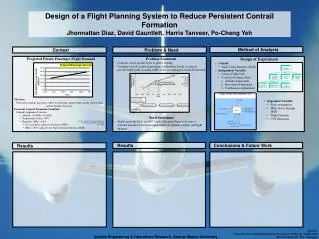
This paper presents a flight planning system designed to mitigate persistent contrail formation, which significantly affects climate change. Recognizing that contrails can have a climate impact three to four times greater than CO2 emissions, this system incorporates stakeholder needs, optimizing flight paths to avoid Ice Super-Saturated Regions (ISSR). It offers a Decision Support System for the FAA and AOC, estimating fuel consumption, contrail mileage, and flight durations while analyzing trade-offs. The study utilizes control and variable parameters to enhance operational efficiency and reduce environmental harm.

Advanced Flight Planning System to Minimize Contrail Formation and Environmental Impact
E N D
Presentation Transcript
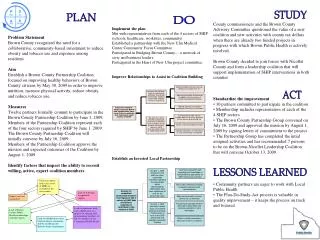
Design of a Flight Planning System to Reduce Persistent Contrail Formation JhonnattanDiaz, David Gauntlett, Harris Tanveer, Po-Cheng Yeh Method of Analysis Context Problem & Need • Projected Future Passenger Flight Demand • The Issue: • Persistent contrails may have a three to four times greater effect on the climate than carbon dioxide emissions. • Persistent Contrail Formation Condition: • Schmidt-ApplemanCriterion • Altitude: 29,000ft - 41,000ft • Temperature: below -40℃ • Humidity: RHi > 100% • Ice content/ice capacity (Similar to RHw) • RHi > 100% indicates Ice Super-Saturated Region (ISSR) • Problem Statement • Contrails create another layer to global heating • Currently lack of system negotiating stakeholders’ needs in order to provide flight paths avoiding ISSR while accounting for tradeoffs between • Need Statement • Need to provide FAA and AOC with a Decision Support System to estimate amount of fuel consumed, miles of contrails formed, and flight duration. • Design of Experiment • Control: • Great Circle Distance (GCD) • Independent Variable: • Airway Flight Path • Contrail Avoidance Path • Altitude Adjustment • Horizontal Adjustment • Combination Adjustment • Dependent Variable: • Fuel consumption • Miles flown through ISSR • Flight Duration • CO2 Emissions Palikonda, Rabindra. “Contrail climatology over the USA from MODIS and AVHRR data.” 2002. Conclusions & Future Work Results Results Sponsors: Center for Air Transportation Systems Research (CATSR), Mr. Akshay Belle Metron Aviation, Dr. Terry Thompson System Engineering & Operations Research, George Mason University