
Exploring the Microscopic World of Bacteria: Functions, Shapes, and Impact
E N D
Presentation Transcript
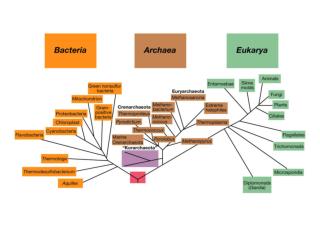
2 Kingdoms of Bacteria Kingdom Archaebacteria Kingdom Bacteria True Bacteria Single Celled No Nucleus or Organelle DNA- 1 Strand -turns on and off Microscopic • Ancient Bacteria • Oldest living cells on Earth • Can’t survive in oxygen • Extreme Environments- Volcanoes, Hot Springs, Salt-Water
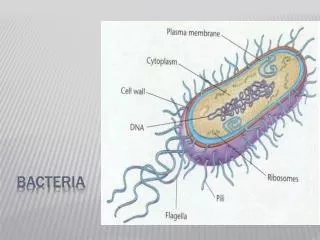
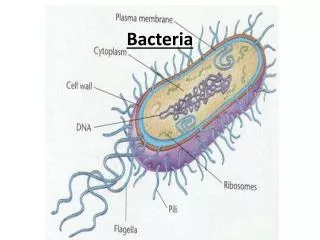
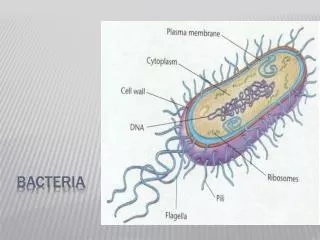
Parts of a Bacteria Cell • Flagella- tail like structure used for movement. • Chromosomes & DNA- stores hereditary information. • Cell Wall- protection
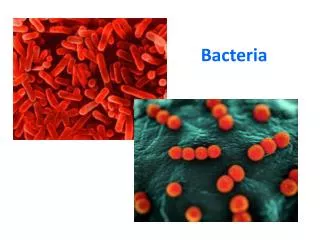
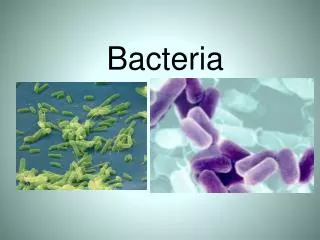
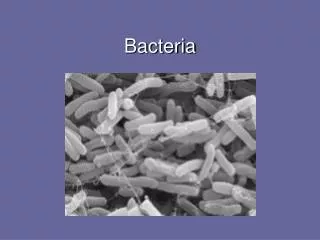
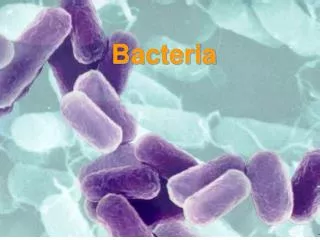
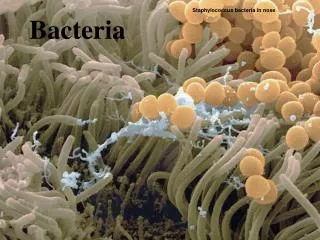
Shapes of Bacteria • Cocci- round • Bacilli- oval shaped • Spirilla- long and skinny
Combinations of Shapes 1. Strepto- Chains 2. Staph- Clusters
Bacteria Cell Reproduction • Binary Fission- division of bacteria by splitting into 2 identical cells from 1 parent cell. • Asexual Reproduction
Helpful Bacteria • Food- develops acids to turn into different tastes and smells. - Ex. Cheese, Sauerkraut, Vinegar, Yogurt *Pasteurization- Louis Pasteur, heating to high temps and cooling slowing bacteria growth. 2. Aids Animal Digestion (Symbiosis) • Bacteria gets food and shelter • Helps animals break down plant sugars
Helpful Bacteria Continued 3. Enhances Plant Growth- takes nitrogen from the air and brings it into the soil. 4. Industry - Alcohol- Fermentation Process (acetone) - Oil Eating- Used to clean oil spills. 5. Genetic Engineering - Insulin
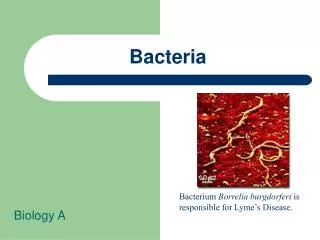
Harmful Bacteria • Disease Causing Examples -MRSA -Meningitis -Infections - Tuberculosis - Bubonic Plague - Salmonella - E. coli
2. Causes Food Spoilage Controlling Bacteria Killing Bacteria 1. Disinfectant- chemicals 2. Fire 3. Sterilization- Boiling water 4. Antibodies • Cold Temperatures- Refrigerator/ Freezer • Salt- removes moisture • Petri Dish
Antibiotic Resistance • Antibiotic- chemicals used to kill microorganisms. • Examples - Penicillin • Streptomycin • Augmentin • Ampicillin • Bacitracin • Antibiotic Resistance- ability of a bacteria to tolerate antibiotics.