SlideServe
Menu
Préférences
© SlideServe · v2026

Brain Injury Promoting Neuroplasticity and Neurogenesis

lisle avatar
20 diapositives · 518 Views · Aug 11, 2014

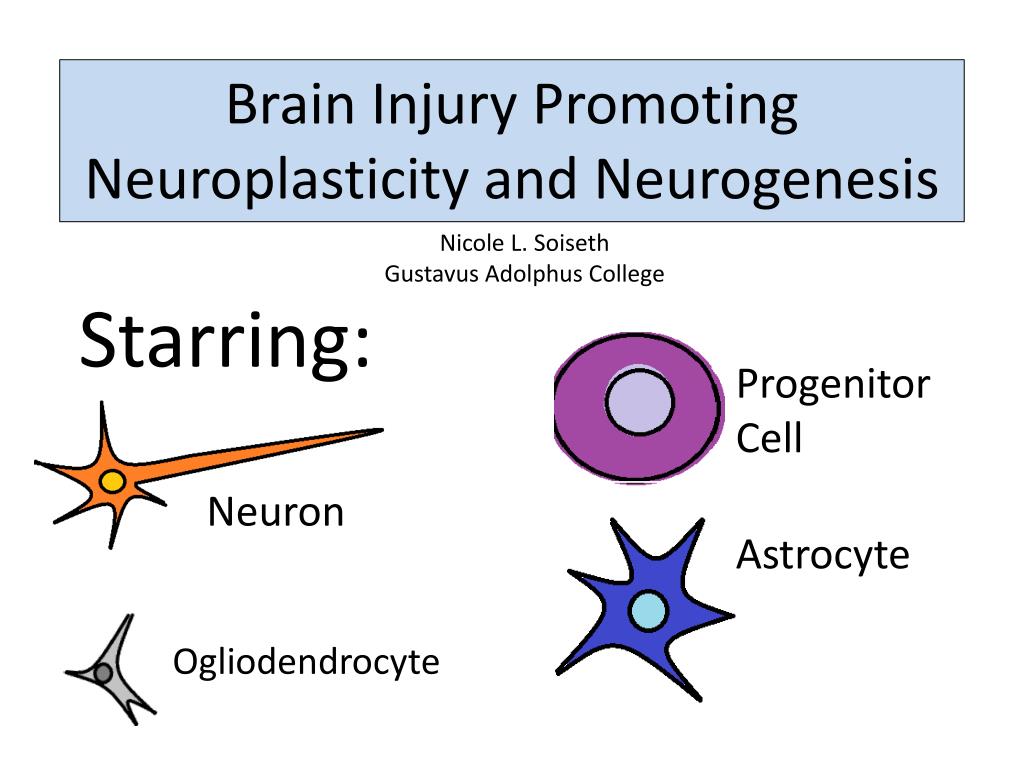
Brain Injury Promoting Neuroplasticity and Neurogenesis. Nicole L. Soiseth Gustavus Adolphus College. Starring:. Progenitor Cell. Neuron. Astrocyte. Ogliodendrocyte. Blood Vessel. Normal Brain Tissue. Cytokines induce local inflammatory response. Injury.
Brain Injury Promoting Neuroplasticity and Neurogenesis - slide 1
01 / 20Brain Injury Promoting Neuroplasticity and Neurogenesis
1 / 17

Télécharger la présentation

Brain Injury Promoting Neuroplasticity and Neurogenesis
Une image / un lien ci-dessous est fourni (tel quel) pour télécharger la présentation

Politique de téléchargement : le contenu du site vous est fourni TEL QUEL pour votre information et votre usage personnel ; il ne peut être vendu, concédé sous licence ni partagé sur d’autres sites sans l’accord de son auteur.Le contenu vous est fourni TEL QUEL, pour votre information et votre usage personnel uniquement. Téléchargez la présentation en cliquant sur ce lien. Lors du téléchargement, si vous ne parvenez pas à télécharger une présentation, l’éditeur a peut-être supprimé le fichier de son serveur.Pendant le téléchargement, si vous ne parvenez pas à obtenir une présentation, le fichier a peut-être été supprimé par l’éditeur.

F I N

Plus de contenu associé

Transcription de la présentation
  1. Brain Injury Promoting Neuroplasticity and Neurogenesis Nicole L. Soiseth GustavusAdolphus College Starring: Progenitor Cell Neuron Astrocyte Ogliodendrocyte

  2. Blood Vessel Normal Brain Tissue

  3. Cytokines induce local inflammatory response Injury Cytokines Released Upon Injury Injured Brain Tissue

  4. Injured Tissue Boundary Astrocytes Become Reactive with Cytokine Activation Injured Brain Tissue

  5. Injured Tissue Reactive Astrocytes Proliferate Injured Brain Tissue

  6. Injured Tissue Proliferated Astrocytes form a barrier around the injured site called a Glial Scar. Injured Brain Tissue

  7. Injured Tissue TheGlial Scar blocks the further release of cytokines from the injured tissue Injured Brain Tissue

  8. Injured Tissue Lets take a closer Look at the events occuring at the Glial Scar… Reactive Astrocytes attract Progenitor cells to the Glial Scar Injured Brain Tissue

  9. Blood Vessel Injured Tissue Astrocytes emit Neurite Inhibitors to keep the progenitor cells undifferentiated until the correct conditions are met

  10. Blood Vessel Injured Tissue Astrocytes increase the amount of nourishment to injured tissues to create an enriched environment known as the ‘Neurogenic Niche.’

  11. Injured Tissue EGF FGF-2 FGF-2 EGF FGF-2 EGF EGF FGF-2 EGF At injury, Astrocytes emit Neurotrophic Factors to promote fate determination of neighboring cells

  12. GFAP+ GFAP+ GFAP+ Injured Tissue GFAP+ GFAP+ GFAP+ GFAP+ MAP2ab+ MAP2ab+ MAP2ab+ MAP2ab+ MAP2ab+ MAP2ab+ GalC+ GalC+ GalC+ Different Combinations of Neurotrophic Factors promote the expression of Cell Surface Markers GalC+ GalC+

  13. GFAP+ GFAP+ GFAP+ Injured Tissue GFAP+ GFAP+ GFAP+ GFAP+ MAP2ab+ MAP2ab+ MAP2ab+ MAP2ab+ MAP2ab+ MAP2ab+ MAP2ab+ MAP2ab+ MAP2ab+ MAP2ab+ GalC+ MAP2ab+ GalC+ GalC+ Reactive Astrocytes can de-differentiate their fate by expressing Cell Surface Markers as well. GalC+ GalC+

  14. GFAP+ GFAP+ GFAP+ Injured Tissue GFAP+ GFAP+ GFAP+ GFAP+ MAP2ab+ MAP2ab+ MAP2ab+ MAP2ab+ MAP2ab+ MAP2ab+ MAP2ab+ MAP2ab+ MAP2ab+ MAP2ab+ GalC+ MAP2ab+ The cells continue to develop and mature into Astrocytes, Neurons, and Ogliodendrocytesusing the nutrient rich ‘neurogenic niche’. GalC+ GalC+ GalC+ GalC+

  15. GFAP+ GFAP+ GFAP+ Injured Tissue GFAP+ GFAP+ GFAP+ GFAP+ MAP2ab+ Glutamate MAP2ab+ MAP2ab+ Glutamate MAP2ab+ Glutamate MAP2ab+ MAP2ab+ MAP2ab+ MAP2ab+ MAP2ab+ GABA MAP2ab+ GABA GalC+ MAP2ab+ GalC+ GalC+ If new neurons are stimulated by existing neurons, they become wired into existing circuits GalC+ GalC+

  16. GFAP+ GFAP+ GFAP+ Injured Tissue GFAP+ GFAP+ GFAP+ GFAP+ MAP2ab+ MAP2ab+ MAP2ab+ MAP2ab+ MAP2ab+ MAP2ab+ GalC+ GalC+ GalC+ If new neurons are NOT stimulated, then they undergo programmed cell death (Apoptosis) GalC+ GalC+

  17. GFAP+ GFAP+ GFAP+ Injured Tissue GFAP+ GFAP+ GFAP+ GFAP+ MAP2ab+ MAP2ab+ MAP2ab+ MAP2ab+ MAP2ab+ MAP2ab+ GalC+ GalC+ The Injured site slowly regains function with stimulation in neighboring neuron circuits and cortical re-mapping. GalC+ GalC+ GalC+

  18. GFAP+ GFAP+ GFAP+ GFAP+ GFAP+ GFAP+ GFAP+ MAP2ab+ MAP2ab+ MAP2ab+ MAP2ab+ MAP2ab+ MAP2ab+ GalC+ GalC+ Reactive Astrocytesreturn to their Quiescent state until they are activated once again. GalC+ GalC+ GalC+

  19. Blood Vessel The brain tissue may never function the same after an injury, but it attempts to return to a Normal state.

  20. The End!