Hip and Pelvis
420 likes | 559 Vues
The hip and pelvis comprise the strongest and most stable articulations in the human body, protected by surrounding musculature. They play crucial roles in weight transmission, house vital organs, and support various muscle attachments. Differences between male and female pelvises highlight distinct anatomical features. Common injuries affecting the hip and thigh, such as fractures and strains, underscore the need for proper conditioning and rehabilitation. This chapter provides a comprehensive overview of the skeletal structure, primary muscles, and common conditions related to the hip and pelvis.


Hip and Pelvis
E N D
Presentation Transcript
Hip and Pelvis Chapter 19
Hip & Pelvis • Strongest articulation in body • Most stable articulation • Well protected & surrounded by muscle on all sides • Muscles of back, abdomen, hamstrings, quadriceps, abductors, adductors, and gluteals attach • Freely moveable, ball-and-socket
Function of Pelvis • Transmit weight from axial skeleton to LE when standing or to ischial tuberosities when sitting • Provides attachments for various muscles that insert onto and control LE • House parts of digestive and urinary tract • Houses reproductive systems
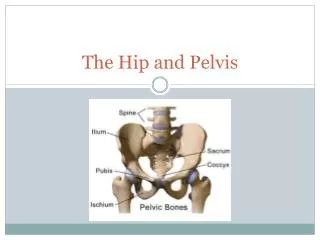
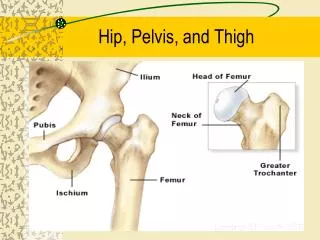
Pelvis—Skeletal Structure • Ilium • Iliac crest • Greater sciatic notch • Iliac fossa • Sacrum • Ischium • Obturator foramen • Pubis • Pubic Symphsis • Coccyx
Pelvis—Skeletal Structure • Anterior Superior Iliac Spine (ASIS) • Anterior Inferior Iliac Spine (AIIS) • Posterior Superior Iliac Spine (PSIS) • Ischial Tuberosity • Greater Sciatic Notch • Obturator Foramen
Pelvis—Skeletal Structure Ischial Tuberosity
Comparison of Male & Female Pelvis • Male • More dense • Muscle attachments more sharply defined • Female • Smaller • Shorter • Wider
Male versus Female Male Female
Hip—Ligaments • Iliofemoral • Pubofemoral • Ischiofemoral
Primary Muscles of the Pelvis, Hip & Thigh • Gluteal muscles • Gluteus medius • Gluteus minimus • Gluteus maximus • Hip flexors • Iliopsoas • Psoas Major/Minor • Sartorius • Pectineus • Rectus femoris • Adductors • Adductor longus • Adductor brevis • Adductor magnus • Hamstrings • Biceps femoris • Semimembranosus • semitendinosus
Gluteal Muscles • Hip extension • Internal rotation • External rotation • Abduction
Iliotibial Band • Thickening of the fascia • Runs up outside of thigh • Top of hip & crosses knee • Holds our leg straight when we stand, giving the larger thigh muscles a chance to rest • Tensor Fasciae Latae (TFL)
Bursitis • Most frequent location is over lateral hip • Greater trochanteric bursitis • Tenderness lateral hip • Made worse by walking, running, or twisting hip • Insufficient stretching or warm-up • Treatment: • Limit activity • Stretching exercises • Ice & ice massage • NSAIDs
Fracture • 3 classifications: • Femoral neck • Intertrochanteric • Subtrochanteric • Causes: • Falling (elderly) • Extreme trauma (car accidents) • Impact injury (athletics) • Signs & Symptoms • Leg may appear abnormally rotated • Cannot move hip without pain • X-ray to confirm • Treatment • Depends on fracture type and medical condition
Quad & Hip Flexor Strain • Common in those sports that require jumping, kicking, or repetitive sprinting • Quad: rectus femoris • Hip Flexor: rectus femoris and/or iliopsoas • Treatment • Ice • Compression • NSAIDs • Rehab • Progressive • Sport specific
Hamstring Strain • Causes • Sudden, explosive starts and stops • Chronic overuse • Making quick start or stop when leg extended • Overtraining (fatigued hamstring muscles) • Muscle imbalance (quad muscles overdeveloped) • Inflexibility • Overstretched • Insufficient warm-up, stretching, or conditioning • Direct blow while muscles contracted • Signs & Symptoms • Sharp pain (most common in belly of muscle) • Bruising • Swelling • Loss of strength • Feel or hear “pop”
Hamstring Strain • Treatment • RICE • Medication • Physical therapy/rehab • Crutches • Massage • Rehabilitation • Progressive • Weight-training • Preventative • Proper stretching • Recovery Time • Mild: 2-10 days • Moderate: 10 days-6 weeks • Severe: 6-10 weeks
Adductor Strain • MOI: sudden sideways change in direction • Skating • Soccer • Track & field • Tennis • Adductor longus • Treatment: • Difficult to treat • Risk of re-injury is high • Rest, ice, anti-inflammatory meds • Stretching & strengthening exercises
Iliotibial Band Syndrome Treatment • Lateral knee pain • Pain worse after running • Especially after climbing hills/stairs • Often not present until mid-way through run • Associated with “snapping hip” • Attributed to: • Over-training • Doubling mileage • Increase in hill repeats • Running on uneven roads • Tight indoor tracks • Poor running shoes • Address faulty pelvic mechanics • Reduce or stop running • Cross-train • Ice • Stretch Gluteals and TFL • Self-massage outside thigh and/or gluteals • Address faulty foot mechanics, running shoes, or orthotics • Return to running gradually
Quadriceps Contusion • Direct blow to thigh from helmet or knee • Football, rugby, soccer, basketball • Limit motion • Affect gait • Severity graded by ROM at time of injury • Treatment • Immediate compression, ice, NWB • Massage contraindicated • Recovery Time: 2 days to 6 months • Complication: Myositis Ossificans
Myositis Ossificans Signs & Symptoms Treatment • Ossifying mass (calcium deposit) forms within the muscle • Result of recurrent trauma to quad muscle that was not properly protected after mild injury • Hard, painful mass in soft tissue • Progressive loss of knee flexion • X-ray at four weeks • Heat • Limit joint motion • Rehab exs limit pain • Discouraged 6months: • Passive stretching • Vigorous exercise • Calcium reabsorbtion may take 3-6 months
Iliac Crest Contusion • “hip pointer” • Caused by direct blow to hip • Common in football due to improperly fitted hip pads • Signs & Symptoms: • Extreme tenderness • Swelling • Ecchymosis • Treatment • Ice, compression • Pad injured area • RTP: dictated by athlete’s pain level
Overuse Injuries • MOI: cumulative effects of very low levels of stress • Repetitive action of running • Chronic muscle strains • Stress fractures • Tendonitis • Overuse/overload fatigue within the tendon • Snapping hip • Iliopsoas tendon snapping over the head of the femur • Bursitis • CROSS-TRAINING
Stress Fractures • Pelvis: occur most often in runners & dancers • Femur: occur usually in runners • Signs/Symptoms: • Chronic, ill-defined pain over groin and thigh • Initially diagnosed with muscle strain • Symptoms do not resolve with rest & rehab • Treatment: • Rest • Non-weight-bearing endurance exercises