Understanding Ice Ages: Theories, Glaciers, and Climate Change Impacts
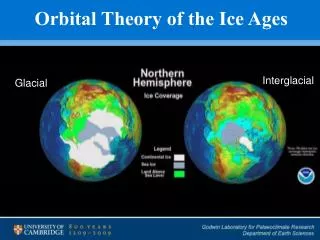
This comprehensive overview explores the role of glaciers and the theories surrounding ice ages, focusing on the contributions of Swiss naturalist Louis Agassiz and Milutin Milankovitch. Delve into the three levels of glacier theory and the glacial movements that have shaped Europe’s landscape. The discussion extends to the links between global warming and ice ages, highlighting alarming predictions about sea-level rise and the potential for new ice ages as a result of climate change. Discover the impact of glaciers as the largest moving objects on Earth.

Understanding Ice Ages: Theories, Glaciers, and Climate Change Impacts
E N D
Presentation Transcript
Ice Ages By: Nick, Scott, & Sam
Legend–wait for it–dary video Ice Age The Movie
Louis Agassiz • Swiss naturalist • Theory (p. 421) • Not much support for his ideas in Europe • Agassiz in America (p. 423)
Glacier Theory of 1800 (3 levels) • 1. Alpine glaciers - Modern glaciers in the Swiss Alps and Norway had once extended farther down their valleys than today • 2. Mountain ice caps - Glacier cover in the Swiss Alps and Norway had once been much thicker and had ice caps • 3. Continental Ice Sheets - Vast sheet of ice spread from the Arctic and covered all of Europe as far south as the Mediterranean
MilutinMilankovitch • Suggested that Ice Ages have to do with the movement on the Earth (p. 424-425) • Köppen continued on Milankovitch’s ideas (p. 426)
Glaciers • Largest moving objects on Earth • Massive rivers of ice that form in areas where more snow falls each winter than melts each summer • Glaciers and their Effects
Global Warming Theory #1 • Global sea level has already risen by 4 to 8 inches in the past century • Arctic summers could be ice-free by 2040, and sea levels could rise as much as 23 inches by 2100 if current warming patterns continue • Global Warming - Glacier Melt
Global Warming Theory #2 • Global warming may actually cause an ice age • Theory (p. 431) Could This Cause This?
Bibliography • http://academic.emporia.edu/aberjame/histgeol/agassiz/glacial.htm • http://science.howstuffworks.com/environmental/earth/geophysics/glacier.htm • http://www.nrdc.org/globalwarming/fcons/fcons4.asp