Download

1 / 7
70 likes | 191 Vues
Explore the concept of comparative advantage between Brazil and Mexico through practical problems regarding opportunity costs. This resource includes analysis of the production costs of cars and computers in both countries and how they can efficiently trade. Learn about absolute advantages, market dynamics, and the effects of external economic events. Perfect for students and enthusiasts looking to deepen their understanding of international economics and trade theories. Engage with real-life scenarios to apply these concepts.

E N D
3 Practice Free Response Questions Have Fun!
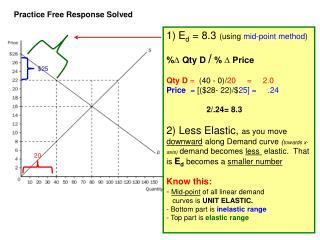
Opportunity Cost Table (give-up) (gain) BRAZIL MEXICO 1 Car = ____ Computer 1 Car = _____ Computer 1 Computer = ____ Car 1 Computer ____ Car 4 1 1 1/4 Comparative Advantage Computers: Brazil:Cost of computer = 1/4 car vs. 1 car Comparative Advantage Cars: Mexico:Cost of car = 1 computer vs. 4 computers Cars Practice Problem #1 Cars BRAZIL MEXICO 400,000 Absolute Advantage in Cars: Mexico Equally efficient at Computers 100,000 400,000 Computers 400,000 Computers
Ranges for Efficient Trade(Terms of Trade) Brazil must buy cars at a ratio above 1/4 car per computer Mexico must sell cars at a ratio below 1 computer per car Terms of Trade: > ¼ & less than 1 car per computer or > 1 & less than 4 computers per car
P2 --------------------- E2 AD2 ------------------- Y2 Practice Problem #2 American Economy Price Level LRAS1 SRAS1 Event: Japanese Economy booms --------------- P1 E1 AD1 Y1 Real GDP Japanese economy booms => Japanese buy more imports (some from USA) USA exports more (NX ↑) => AD ↑ => GDP ↑ & Price Level ↑
S1 S1 S2 D2 D1 D1 Practice Problem #2 Market for Dollars Market for Yen Yen Price of a dollar Dollar Price of a Yen Dollar Appreciates P1 ------------------- P1 -------------------- Yen Depreciates ---------------------- --------------------- Q1 Qty of Dollars Q1 Qty of Yen Japanese disposable income rises => buy more imports from USA: => Japanese must exchange Yen for dollars: They demand dollars & they supply Yen skip question #2 part d => not on Final Exam
Practice Problem #3 • The Federal Funds rate is the interest rate Banks can lend or borrow money from each other • The Fed would use purchase Treasury bonds/securities in the open-market. This would inject money into the financial system, thereby increasing MS ↑. An increase in MS would shift MS to the right which leads to a lower nominal interest rates
Practice Problem #3 continued • The multiplier is 1/r.r. so 1/.20 = 5 multiplier. • -Therefore, a 10 million purchase of bonds would lead to a 50 • million ↑ MS. • -However, only 8 million could be loaned out….Therefore,Loans • could increase by $40 million • Nominal Interest rates = Real Interest Rates + Expected Inflation • If inflation rises and is expected to be permanent then inflation expectations • nominal interest rates( think long term) would rise. • Real interest rates would remain unchanged based on rising inflation • expectations and the equation above