Unveiling Earth's Structure: Key Concepts in Density Study
Explore the significance of density in understanding Earth's composition, from particle density to structural implications. Dive into how science and technology reshape our models of the Earth's structure.


Unveiling Earth's Structure: Key Concepts in Density Study
E N D
Presentation Transcript
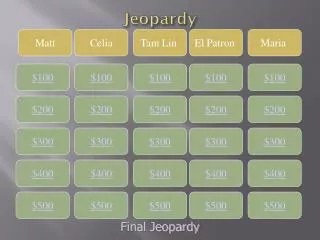
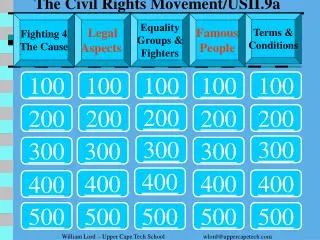
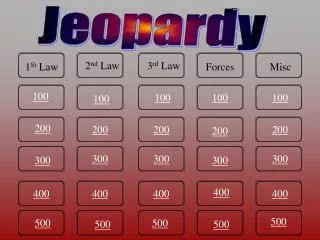
Grab Bag Density Particle Density and Size Earth Structure $100 $100 $100 $100 $200 $200 $200 $200 $300 $300 $300 $300 $400 $400 $400 $400 $500 $500 $500 $500
Gab Bag Density Particle Density and Size Earth Structure $100 $100 $100 $100 $200 $200 $200 $200 $300 $300 $300 $300 $400 $400 $400 $400 $500 $500 $500 $500
Gab Bag $100 • Which of these statements relates to this situation? • A. Science can be used by many people, not just scientists • B. Science can be used by scientists but not by most people • C. Science is too complicated to be used to solve problems • D. Science is not useful in everyday life
Gab Bag $200 • A gold panner shakes a mixture of mud and water in a gold pan. He looks for gold at the • bottom. Why? • A. gold is very dense and sinks • B. gold dissolves in water and is carried there • C. gold is hard to find because it can “hide” • D. gold is repelled by other Earth materials
Gab Bag $300 • Which answer below best describes the future of models of Earth’s structure? • A. Models will probably stay the same because scientists have learned all there is to know about the structure of Earth. • B. Models will probably stay the same because scientists don’t like to create new models. • C. Models will probably change because scientists like to change things. • D. Models will probably change because new technology will provide better information about the structure of Earth.
Gab Bag $400 • If you went to a medical clinic to find out your body volume, how would they do this? • A. With a tape measure, they would measure your arms, stomach and thighs. • B. They would have you stand on scales and read your weight. • C. They would put you in a tank to determine how much water you displace. • D. Have you keep a monthly record of increase or decrease in your clothes sizes.
Gab Bag $500 • Knowing that antifreeze is less dense that water, how could you use this fact to find out if your family car had any antifreeze in the radiator? • A. Drain some radiator liquid and record its temperature to see if it is cooler than water. • B. Drain some radiator liquid and pour it on iron to see if the iron rusts faster than without the liquid. • C. Drain some radiator liquid, smell it, and compare the smell to oil. • D. Drain some radiator liquid and compare its weight to the weight of the same amount of water.
Gab Bag $100-Answer • A. Science can be used by many people, not just scientists
Gab Bag $200-Answer • A. gold is very dense and sinks
Gab Bag $300-Answer • D. Models will probably change because new technology will provide better information about the structure of Earth.
Gab Bag $400-Answer • C. They would put you in a tank to determine how much water you displace.
Gab Bag $500-Answer • D. Drain some radiator liquid and compare its weight to the weight of the same amount of water
Density $100 • What would you use to determine the mass of an object? • A. Meter stick • B. Graduated cylinder • C. Scale in pounds • D. Triple beam balance
Density $200 • A liquid is found to have a volume of 75 mL in a graduated cylinder. When placed on a balance, the liquid and graduated cylinder have a mass of 125 g. The empty graduated cylinder has a mass of 50 g. What is the density of the liquid? • A. 0.1 g/mL • B. 1.0 g/mL • C. 2.2 g/mL • 22.0 g/mL Daily Double
Density $300 • Which is the correct formula for density? • A. Mass divided by Volume • B. Mass times weight • C. Volume divided by mass • D. Volume times mass
Density $400 • Why does ice float on water? • A. it is colder than water • B. it is less dense than water • C. it is harder than water • D. it is lighter than water
Density $500 • A student has two objects. Object 1 has a mass of 10 g and a volume of 5 cm 3. Object 2 has a mass of 100 g and a volume of 200 cm 3. If both objects are placed in water, which will float and why? • A. Object 2 will float because it is less dense than water • B. Object 2 will float because it has more mass than object 1 • C. Object 1 will float because it is less dense than object 2 • D. Object 1 will float because it has less mass than object 2
Density $100-Answer • D. Triple beam balance
Density $200-Answer • B. 1.0 g/mL
Density $300-Answer • A. Mass divided by Volume
Density $400-Answer • B. it is less dense than water
Density $500-Answer • A. Object 2 will float because it is less dense than water
Particle Density and Size $100 • When mixed, what would be the order of the substances starting from the bottom and going up? • A. rock, aluminum, plastic, water, oil • B. rock, aluminum, water, plastic, oil • C. rock, plastic, oil, water, aluminum • D. rock, oil, aluminum, plastic, water
Particle Density and Size $200 • Gold panning separates gold flakes from stream gravel by shaking the mixture in a pan and • scraping the gravel layers off. Why are the tiny gold particles found on the bottom on the pan? • A. They are larger than the gravel • B. They are denser than the gravel • C. They are brighter in color than the gravel • D. They are harder to find than the gravel
Particle Density and Size $300 • In winter, a layer of cold air settles in the valleys and warmer air is often found higher in the • mountains. What might account for this condition? • A. There is more warm air than cold air. • B. There is more cold air than warm air. • C. Cold air is less dense than warm air. • D. Cold air is more dense than warm air.
Particle Density and Size $400 • A student shakes a jar with a mixture of sand types. Instead of mixing, the sand grains • separate into layers. Why? • A. The grains are different colors. • B. The grains have different shapes. • C. The grains have different densities. • D. The jar has a round shape.
Particle Density and Size $500 • How has technology helped earth scientists measure the density of various kinds of rocks? • A. Lasers help see into rocks and detect the most dense ones. • B. Seismic waves reflect off of more dense rocks differently than less dense rocks. • C. Sonar is used to identify the density of certain metamorphic rocks. • D. Simple observations allow us to determine if rocks are sedimentary, igneous or metamorphic
Particle Density and Size $100-Answer • A. rock, aluminum, plastic, water, oil
Particle Density and Size $200-Answer • B. They are denser than the gravel
Particle Density and Size $300-Answer • C. Cold air is less dense than warm air.
Particle Density and Size $400-Answer • C. The grains have different densities.
Particle Density and Size $500-Answer • B. Seismic waves reflect off of more dense rocks differently than less dense rocks
Earth Structure $100 • Earth’s interior is divided into layers. What are the four divisions, in order, of least dense to most dense? • A. Atmosphere, Surface, interior, outside • B. Crust, mantle, outer core, inner core • C. Mantle, Core, Atmosphere, Center • D. Nucleus, Crust, Mantle, Core
Earth Structure $200 • Why does air float above the Earth’s surface? It is • A. denser and rises • B. less dense and sinks • C. less dense and rises • D. the same as crust
Earth Structure $300 • You are given the following materials and their densities and then asked to construct a model of the earth consisting of a core, mantle, crust, water, and air. Based on density, which material would be the best choice to represent the core of the Earth? • A. cotton • B. clay • C. aluminum foil • D. nickel
Earth Structure $400 • Which of the following statements best explains why earth is layered in the following order: air -> water -> crust -> core? • A. Things in nature like to order themselves by color, red to the bottom and blue to the top • B. Things in nature like to order themselves by density, most dense to the bottom and least dense to the top • C. Things in nature like to order themselves by particle size, largest particles to the bottom and smallest particles to the top • D. Things in nature like to order themselves by temperature, hottest to the bottom and coolest to the top
Earth Structure $500 • Pat is given the following items: a rock, sand, water, and metal bar. Pat calculates the density of each object. The results are shown below. • Rock = 3.2 g/mL • Sand = 1.9g/mL • Water = 1.0g/mL • Piece of metal = 6.5g/mL • Pat then puts all of the items into a jar and shakes it up. Pat lets the jar settle for 5 minutes.What would be the expected order of the items going from the top of the container to the bottom? • A. rock, sand, water, metal • B. metal, rock, sand, water • C. water, sand, rock, metal • D. sand, metal, water, rock
Earth Structure $100-Answer • B. Crust, mantle, outer core, inner core
Earth Structure $200-Answer • C. less dense and rises
Earth Structure $300-Answer • D. nickel
Earth Structure $400-Answer • B. Things in nature like to order themselves by density, most dense to the bottom and least dense to the top
Earth Structure $500-Answer • B. metal, rock, sand, water
Final Jeopardy • Earth Model
Final Jeopardy • You are building a model of Earth based on the density of layers. What materials would you use for each layer? Include water and atmosphere. (Hint: are they liquid, gas, solid, sticky, dense…) You have 1 minute to consult…
Final Jeopardy • You are building a model of Earth based on the density of layers. What materials would you use for each layer? Include water and atmosphere. (Hint: are they liquid, gas, solid, sticky, dense…) You have 30 seconds to consult…
Final Jeopardy • You are building a model of Earth based on the density of layers. What materials would you use for each layer? Include water and atmosphere. (Hint: are they liquid, gas, solid, sticky, dense…) You have 15 seconds to consult…
Final Jeopardy • You are building a model of Earth based on the density of layers. What materials would you use for each layer? Include water and atmosphere. (Hint: are they liquid, gas, solid, sticky, dense…) Time Is Up
Final Jeopardy-Answer • Atmosphere - dry ice - gas • Water - Water or Jell-O - liquid • Crust - cookies - solid • Mantle - molasses - thick plastic liquid • Outer core - hot fudge - liquid • Inner core - rock candy - solid
Jeopardy • Thank you for playing another fine round of America’s favorite question and answer game.