Download
1 / 22
230 likes | 335 Vues
This exploration delves into the complex motivations behind European imperialism in Asia and Africa during the 19th and early 20th centuries. It examines the forces of industrialization, militarism, nationalism, and capitalism that drove Western nations to expand their empires. Influenced by social Darwinism and the concept of the "white man's burden," Europeans sought exclusive trading privileges and territories, often at the expense of local populations. Key events like the Sepoy Rebellion and the Boxer Rebellion highlight the resistance and emerging nationalism in colonized regions, culminating in significant movements for independence.

E N D
Asian Imperialism How Western Nations Forced Change
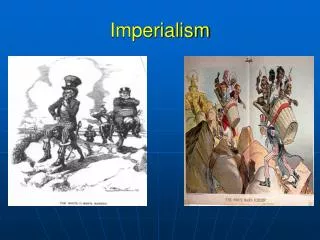
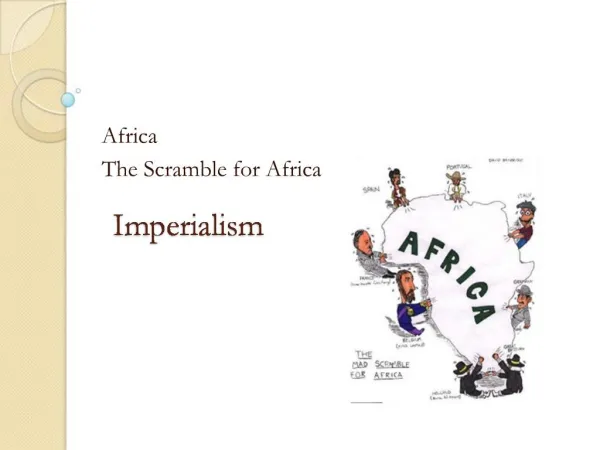
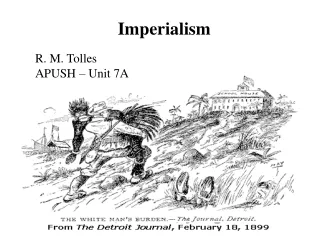
Why did European Nations Imperialize Asia and Africa? • Industrialization • Militarism • Nationalism • Capitalism • Marxist Theory – Capitalists need to expand at all times. • Racism • Social Darwinism / White Burden • Missionaries • Out of Room in Europe – there is no place for expansion here
Britain’s Spheres of Influence • Sphere of Influence: • Area in which an outside power claims exclusive trading and governing privileges • Britain attempted to create a “sphere of influence” in many places as possible • More land = More Power = More Wealth
India – The Crown Jewel of the British Empire • 1700’s – Mughal Empire • 1600’s – 1700’s – British East India Company • By the early 1800’s in fighting gave the British a chance to step in • 1857 – Sepoy Rebellion – Cartridges of weapons dipped in beef and pork fat – Sepoy Soldiers • 1858 – 1945 – The Raj – Oppressive time
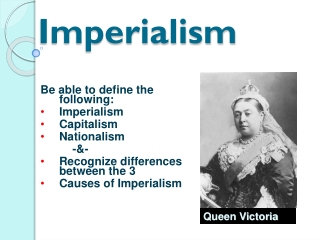
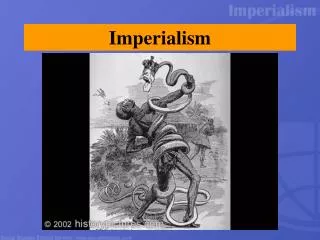
The Raj • Queen Victoria known as Empress of India • Takes government power away from private companies and directly regulate them. • Oppressive – had to buy British goods and sell to British merchants. • Faced famine in 1876 and 1900 – estimates put the death at 10 million or more.
Indian Nationalism • 1880’s – Indian National Congress – Hindu’s • 1906 – Muslim League • 1914 – WWI • 1919 – Amritsar Massacre • Gandhi and Satygraha
Gandhi – Nationalist Hero • 1890’s – South Africa • Satygraha • Swadeshi – Boycott Policy • Homespun • 1930 – Salt March • After WWII – 1946 given independence • Partition of India • Assasination – Jan. 1948
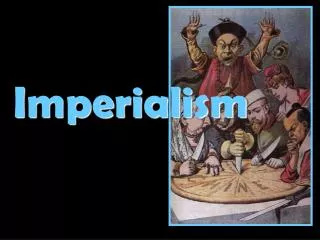
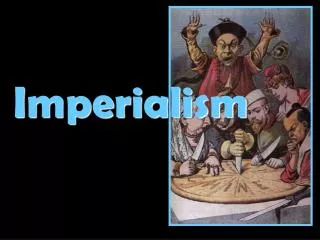
Spheres of Influence • 1644-1912 – Qing Dynasty – started off isolated • By 1800’s Britain decided to get involve • 1832-1842 – Opium War • Treaty of Nanking – Extraterritoriality • Open Door Policy – US • 1900 – Righteous Harmonious Fist – The Boxer Rebellion • 1911 – Sun Yixian
Japan • Commodore Matthew Perry – Invasion of Tokyo Harbor • Forces the change to Emperor Meiji and centralization of power. • Japan modernizes, industrializes, westernizes and imperializes themselves. • Sino-Japanese war - 1894 • Russo-Japanese War – 1904 • Washington Naval Conference - 1921
Emperor Meiji – First Emperor to be more powerful than Shogun
Japanese Zaibatsu’s – Companies supported by the government.
1900-1916 – Most of the Middle East in Ottoman Emp. 1916-1918 – Arab Revolt – pushed by Brits and French 1919 – Sykes-Picot Treaty – Divided between Britain and France 1920-1923 – British and French randomly draw lines between countries – including Iraq. – T.E. Lawrence The Middle East
Conflicting Promises • The British had promised the holy land to three different groups • TH Lawrence – Independent Arab State • Hussein-McMahon Correspondence – Land to Hashemite • Balfour Declaration – British promised homeland to Israel. • Zionism an influence